Bridget Diana Ndagire, Public Health Specialist and Program Director, National Forum of People Living with HIV/AIDS Networks in Uganda
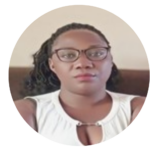 Ndagire Diana Bridget is an expert in HIV programming with over eight years of experience in HIV, SRHR, Gender, and Youth programming, working at the National Forum of People Living with HIV/AIDS Networks in Uganda (NAFOPHANU).
She holds a Bachelor’s degree in Development Studies. With expertise in system strengthening, advocacy, community engagement, resource mobilization, and partnership development, Bridget sits on several committees that guide the national HIV/AIDS response.
Through technical leadership, dialogues, and public platforms on policy, programs, and health services, she has modeled successful working partnerships with communities affected.
Leshan Kereto, Founder and Executive Director, Tareto Africa
 Leshan Kereto is an award-winning sexual and reproductive health and rights (SRHR) champion. He serves as the chairperson of the United Nations Population Fund (UNFPA) and the Kenya Youth Advisory Panel (YAP). He is also the founder of Tareto Africa, a community-based organization in Narok County in Kenya that is widely involved in sexual and reproductive health rights advocacy, mainly focusing on advocating against Female Genital Mutilation (FGM) and Gender Based Violence.
Leshan was awarded the Presidential Recognition Award for outstanding efforts in ending Female Genital Mutilation in Kenya. Furthermore, he was recognized by the World Health Organization as a champion for vaccine equity and access in Africa.
He was enlisted among the top 60 men in Kenya who have exemplarily advocated for gender equality. Leshan was awarded the title of National Hero and officially received the HSC-Head of State Commendation by President William Ruto. He was also awarded the Top 40 under 40 Leadership Award in Kenya.
Leshan also served at the African Union Youth Reference Committee, representing the country in ending global inequalities among young people in the office of the African Union Special Youth Envoy. He continues to champion young people from diverse backgrounds to join and make the world better, and is known for the quote, “Young people are the custodians and designers of the practices that they would like in their generation.”
Willis Mulaa, Former Programs Officer and Service Delivery Coordinator, USAID 4TheChild
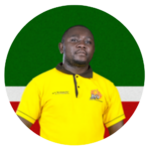 Willis holds a Bachelor’s degree in International Relations and Diplomacy with a proficiency certificate in project management and training in engaging young people on emerging issues.
Willis has worked with USAID-funded mechanisms for the last seven years in various capacities, both at the implementing level and the managerial level. He worked as the Programs Officer for 5 years and then spent 2 years at the management level as the Service Delivery Coordinator.
The programs focused on the prevention of HIV, especially for adolescents and mothers to children. As the Service Delivery Coordinator, Willis witnessed HIV infection rates drop over the years. With the recent funding cuts for HIV programs, there has been a surge in new infections in Kenya, and specifically in Busia County.
Martha Clara Nakato, Public Health Specialist and Community Action Facilitator, Uganda CSO Task Team on Accountability, Efficiency, and Diplomacy
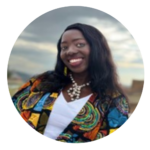 Martha Clara Nakato is a Public Health Specialist and Community Development Facilitator honed in Adolescent and Youth Health with a focus on Sexual Reproductive Health and Rights (SRHR), HIV/AIDs, Gender and Social Justice.
She has shaped health policy agendas across the UN, African Union, East African Community, and at various Ministerial levels. Martha Clara bridges grassroots realities with global decision-making, ensuring young people and communities experiencing marginalization move from being “consulted” to becoming powerful co-creators of solutions.
Dr. Jallicia Jolly, Founder and Director, Black Feminist Reproductive Justice, Equity, and HIV/AIDS Activism (BREHA) Collective
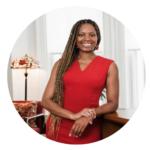 Dr. Jallicia Jolly is a writer and reproductive justice organizer, serving as an Assistant Professor in American Studies and Black Studies at Amherst College. During her sabbatical/research leave for 2025-2026, Dr. Jolly is a Visiting Scholar at Princeton University’s Center on Transnational Policing and the Effron Center for the Study of America.
A 2025 National Academy of Sciences U.S. Kavli Fellow, she merges community-based research on Black women’s health, grassroots activism, and transnational political leadership with reproductive justice organizing and practice in the United States and the Caribbean. Dr. Jolly is the founder and director of the Black Feminist Reproductive Justice, Equity, and HIV/AIDS Activism (BREHA) Collective. This is an interdisciplinary medical humanities lab that bridges research, advocacy, student collaborations, and high-impact learning experiences focused on the health and movement-building of Afro-diasporic girls, women, and gender-diverse individuals.
A public scholar invested in research-informed political action, Dr. Jolly is Co-Chair of Birth Equity and Justice Massachusetts (BEJMA). This multisectoral reproductive justice group brings together clinicians, researchers, community organizations, advocates, and legislators to implement evidence-based interventions to improve outcomes for Black birthing people and advance equity in maternal health policy in the Commonwealth. Her work has been featured in various media outlets, including Forbes, The Washington Post, USA Today, The Boston Globe, and The Huffington Post.
Additionally, Dr. Jolly has been awarded recognition and supported by grants/fellowships such as The Ford Foundation, Fulbright Scholar Program, The Mellon Mays Foundation, National Women’s Studies Association, Yale University’s Center for Interdisciplinary Research on AIDS (CIRA) and LGBT Studies, and Brown University’s Pembroke Center for Teaching and Research on Women.