
Religion and Fertility: A Connection Rooted in Patriarchy
Written by Kirsten Stade | Published: March 9, 2026
The world’s religions: traditions steeped in pronatalism
“Be fruitful and multiply.”
“Women were created to bear children, and men to carry on the line.”
“Children are a heritage from the Lord, the fruit of the womb a reward.”
We are all familiar with these and similar exhortations from world religions for which procreation by the faithful has long been seen as the surest means to grow their flocks. The majority of the world’s religious traditions are marked by pronatalist teachings, which are contained in scripture, promulgated by religious leaders, and enforced by social conventions that exalt parenthood and stigmatize those who do not or cannot partake in it.
At first glance, it would seem that religion is a consistent and unidirectional force toward high fertility, one among the many that exert pressure on people to have children. Of all these pronatalist forces, including parental pressures for grandchildren, marital pressures to produce heirs, and political pressures to expand the base of consumers, laborers, and taxpayers to grow a nation’s economy and power, pressures issuing from one’s religion are some of the most powerful. For most people in the world, religion is a deeply personal and a social aspect of their lives, with religious teachings imparted through a relationship with a respected religious leader and reinforced through social networks around places of worship.
In the world’s largest religion, Christianity, messages about the virtue and paramount importance of childbearing are ubiquitous. For women, motherhood is portrayed as the ultimate fulfillment of life’s purpose. To be a mother is to embody the ideal purity of Mary, to have been cleansed through the ordeal of childbirth of the sinfulness that is otherwise innate to womanhood. Women of Christian faith learn that they “will be saved through childbearing” (1 Timothy. 2.15); Roman Catholic women are told that motherhood is the “fundamental contribution which the Church and humanity expect from [them]” (Evangelium Vitae). These two messages testify to the continuity of pronatalist messaging in Christianity across millennia: The first is from a letter written by the Apostle Paul in the mid-60s AD, the second written by Pope John Paul II in 1995.
And Christianity is not alone in this messaging. In the world’s second-largest and fastest-growing religion, Islam, children are seen as gifts from God. In Hinduism, bearing children is considered a duty whose fulfillment is in the interests of the family, the community, and one’s own salvation. Judaism has a deeply pronatalist tradition, with its commandment to ‘be fruitful and multiply’ along with its depiction of infertile women as experiencing keen suffering. This is balanced by rabbinical precepts that support the use of contraception and abortion to protect women’s wellbeing.
No separation of church and state: when pronatalist theology becomes policy
Pronatalist religious teachings are for the most part inscribed in texts by men long gone. And they are intended for the primarily male audiences of the bishops, cardinals, ministers, rabbis, and swamis charged with propagating them and instilling them among their faithful. But they have profound impacts on the lives of women within these traditions, and many women outside these traditions, today.

Catholic and conservative Protestant denominations give expression to their pronatalist ideology through bans on abortion and modern forms of birth control. For the 1.4 billion Catholics of the world, those who wish to control their fertility must contend with the fact that their faith considers birth control inherently evil, and has prohibited artificial forms thereof since 1968.
The lobbying power of the Vatican, meanwhile, seeks to ensure that these proscriptions transcend the church and are enforced by the state. The Vatican’s power as an international lobby group has been instrumental in the development of the “pro-life” movement in the United States and its efforts throughout the past several decades, many successful, to make abortion difficult or impossible to obtain.
The Vatican lobby has also played a decisive role in the decline in international funding for family planning over the past 30 years. At the UN International Conference on Population and Development (ICPD) in Cairo, Egypt, in 1994, a seismic shift occurred that derailed the international development community’s focus on population stabilization. It also delivered a mortal blow to international investment in the overwhelmingly voluntary, rights-based family planning programs that had been so successful in lowering birth rates in preceding decades. At ICPD, some actors — including the Vatican, right-wing politicians, economists, and other growthist interests — actively worked to sabotage family planning programs. Lobbying by some feminist groups and other NGOs concerned with rare but egregious coercive population control efforts (including China’s one-child policy and India’s forced sterilization campaign) also had a suppressing effect on family planning as funders withdrew support out of fear of stoking controversy. The combined pressures from these disparate but powerful interests succeeded in leaving overall donor funding far short of addressing the unmet need for contraception in low- and middle-income countries to this day.
The machinations of the Vatican at Cairo are an example of the momentous impact religious entities have had on reproductive rights and, ultimately, on birth rates. In recent years there have been efforts to reinforce this influence. In the United States, an alliance among conservative Christianity, white supremacy, and ethnonationalism holds powerful sway over politics, giving rise to bans on abortion in a growing number of US states, threats to the availability and legality of birth control, and social trends such as the trad wife movement that exalt traditional roles for women centered around motherhood. Elements of right-wing nationalism, populism, traditional conservatism, and religious fundamentalism have joined forces and gained political power in countries such as the Philippines and Hungary, where they have enacted strict anti-abortion and other pronatalist policies.
In many parts of the world, similar alliances among religion and ethnocentrism have arisen to create powerful pressures toward procreation for preferred groups. In Modi’s India, popular stereotypes of uniformly high birth rates among Muslims are used to pressure the Hindu majority to maintain its predominance through procreation. In the Middle East, among Jewish and Palestinian populations, religious pronatalism has been politicized and harnessed to serve militaristic and nationalistic ends.
Religion and fertility: how close is the connection?
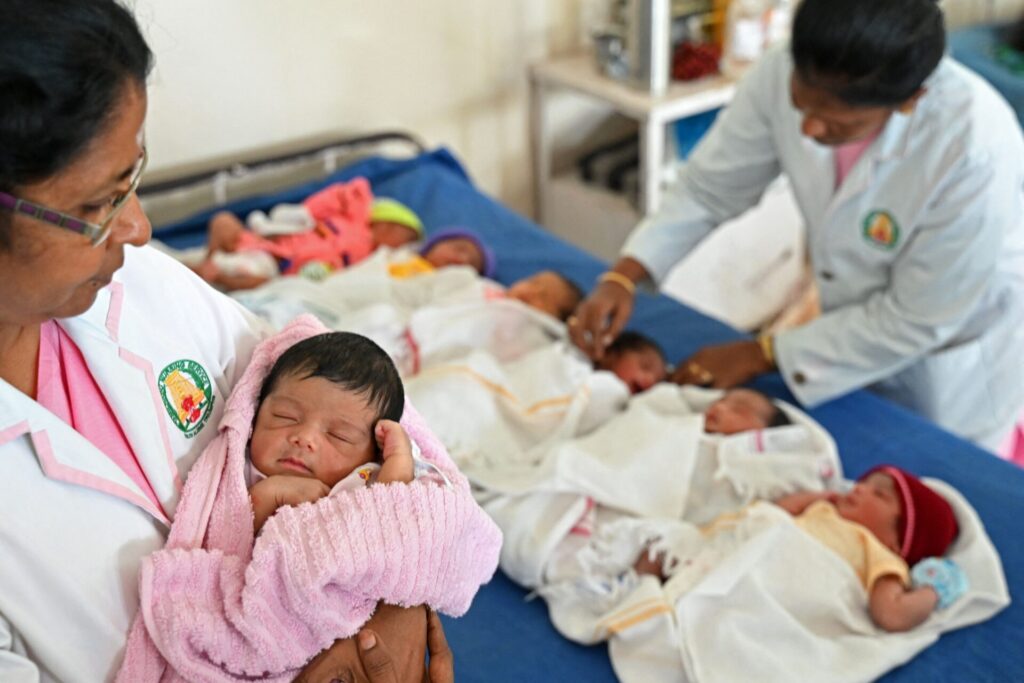
It is clear that many religions incorporate powerful pronatalist traditions, and that these teachings may influence the creation of laws and policies that govern reproductive rights. How do these traditions, laws, and policies translate into people’s choices regarding family size and their use of contraception and abortion? And how do these choices translate into birth rates within religious populations?
Some ways in which religious affiliation impacts birth rates are exactly as we might expect. In the United States and globally, across all religious denominations, those for whom religion is more important have more children than those for whom it is less so.
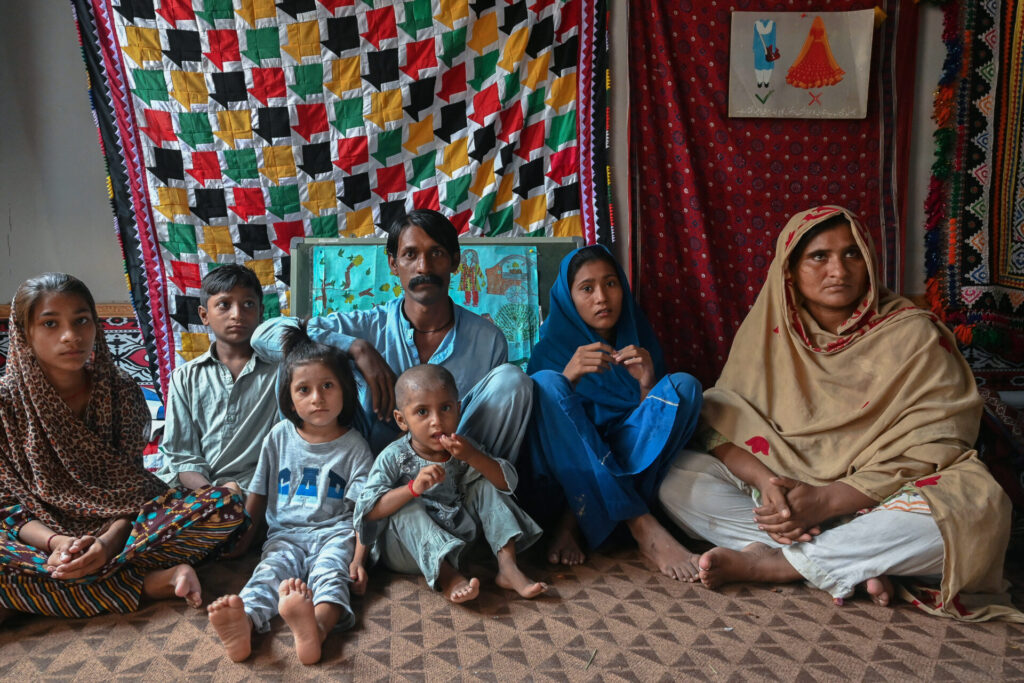
The effect is most pronounced for Muslims. Those Muslims who regularly attend religious services, engage in prayer, and believe in god or hell — all indicators of strong religious conviction — tend to have higher fertility. Yet fertility rates among Islamic countries vary widely. In Pakistan, which is among the most conservative Islamic countries, fertility is projected at 3.4 births per woman in 2026. Despite the existence of a family planning program since the 1950s, many women live in purdah, restricted to the home unless accompanied by a chaperone, and with very low levels of literacy and education. Amid these cultural barriers, a family planning program would have to be well governed and adequately funded to succeed — and Pakistan’s has been neither.
Yet although the religious conservatism of Pakistan’s government no doubt plays a role in its lackluster delivery of family planning services, Islam is not itself hostile to contraception. Despite its pronatalism, Islam also places a high value on independent interpretation of religious teachings — a value that allows for and even encourages family planning when it is in the interests of the family and any children born into it.
And in other Islamic countries, family planning programs have been enormously successful. In Indonesia, a majority-Muslim country with substantial religious and cultural diversity, the government documented the acceptance of family planning by its major religions prior to initiating its family planning program in 1970. Thirty years later, fertility had dropped from 5.6 to 2.6 births per woman. In 1989, Iran began offering a full range of contraceptive options free of charge to men and women. The government’s effort to ensure the buy-in of hesitant clergy helped make the program so successful that Iranian fertility plummeted from 5.6 births per woman in 1985 to 2.0 in 2000. While this program ended in the early 2010s, and a subsequent turn toward pronatalism has made contraception, abortion, and sterilization difficult or impossible to obtain, Iran’s fertility rate remains low, at 1.7 births per woman.
These examples are testament to the power of well-crafted family planning programs — programs that provide access to contraception as well as the education and empowerment that allow women to use it. And, throughout the Middle East and North Africa, fertility has declined dramatically over the past half-century due to a number of factors, including the availability of family planning services as well as delayed marriage and increased education of women and girls. This is consistent with the global trend across all religions. An exception is Israel, whose projected 2026 fertility rate at 2.7 is the highest among industrialized countries. This is the result of deliberately pronatalist policies that historically focused on maximizing birth rates among Ashkenazi Jews. The goal of these policies is both to restore the global population of Jews following the devastation of the Holocaust, and to compete demographically with Palestinians (the fertility rate is 3.1 in Gaza and 3.4 in the West Bank), Israeli Arabs, and non-European Jews.

Although the global Christian fertility rate is higher than the global average (2.6 versus 2.4 births per woman in the period 2015-2020), some of the lowest birth rates in the world are in strongly Catholic countries. Many theories have been advanced to explain the extraordinarily low fertility of countries like Spain (1.2 births per woman), ranging from the poor economic prospects of young people who cannot afford to form a household and family of their own, to growing secularization and associated cultural developments such as declining rates of marriage. But it is worth noting that most of the European Catholic countries have established public health systems that make contraceptives widely available and largely free, bringing family planning within reach for citizens of all religious backgrounds. While Italy is an exception, with limited financial coverage and continued stigmatization of contraception and abortion, couples are still managing to avoid pregnancy. Despite extensive use of methods with high user error, like condoms and withdrawal, and low use of modern hormonal methods, Italy’s fertility remains at the exceptionally low rate of 1.2 births per woman.
Declining birth rates are not limited to European Catholics; many heavily Catholic Latin American countries have extremely low fertility rates and populations that support liberalization of Church doctrine on birth control. Countries like Colombia have government-sponsored family planning programs that support a low fertility rate of 1.6 births per woman. Costa Rica’s hugely successful family planning program originated with a grassroots movement concerned about deforestation, and has been promoted by an Episcopalian minister and institutionalized under a conservative Catholic president.
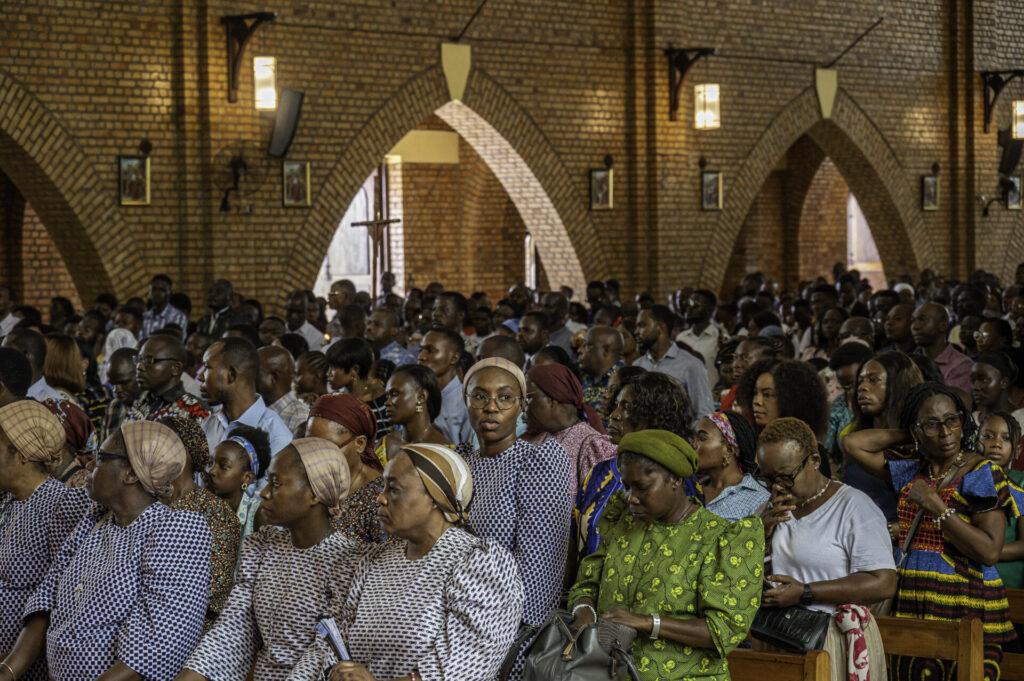
Around the world, it is clear that even in deeply religious countries, the trend in birth rates is down as contraception becomes more widely available. In fact, of the 10 countries in the world with the largest Catholic populations, only the Democratic Republic of the Congo has an above-replacement fertility rate (of 5.8 births per woman). This is of course consistent with continued high fertility across sub-Saharan Africa, a region that will account for most of the world’s population growth this century. Roughly 95% of the population of sub-Saharan Africa identifies as religious. Birth rates are highest among Muslim populations and among followers of African Indigenous Religions; these populations also have high levels of polygyny where women’s status among several wives, as well as their financial prospects, are enhanced by having more children. Religion can also sharply limit opportunities for women and girls to obtain an education: The Apostolic tradition practiced in Mozambique and Eswatini encourages subjugation of women and girls, so those opportunities are at a minimum and birth rates are high. This is just one example of how religion and deeply entrenched patriarchy have effects on women and girls that are far-reaching and difficult to disentangle.
At the other end of the spectrum from practitioners of deeply conservative religious traditions are those whose religion has no pronatalist teachings, or who are unaffiliated with any religion. Buddhism, which is practiced by roughly 4% of the world’s population, does not particularly encourage childbirth. Buddhists believe that while a new life is an opportunity to spread the joy of enlightenment, this joy must be balanced against inevitable suffering which is even more likely in an overpopulated world. According to the Dalai Lama:
“From a Buddhist viewpoint every human being is precious, and one should avoid family planning and birth control. But then if we look from the global level, that precious human life is now overcrowding the world. As a result, not only is it a question of survival of a single human being but that of the entire humanity. Therefore, the conclusion is that family planning is necessary provided it is based on non-violent principles.”
Buddhists have a fertility rate of 1.6 births per woman and are projected to decline as a percentage of the world’s population. Those who are unaffiliated with any religion also have a relatively low global fertility rate, although this group has grown to more than 24% of the global population. This group of religious “nones” is projected to continue growing, not due to its fertility but due to people leaving their religions behind.
Surmounting religious obstacles to reproductive rights: the power of family planning

There is no doubt that pronatalist religious teachings have profound impacts on the way people live their lives, and that these influences in turn make for significant differences in birth rates. But drilling down into the details of these relationships reveals some surprising realities. Many of the most religious populations in the world, who follow traditions marked by deeply pronatalist teachings, have fertility rates that are well below replacement and continuing to drop. These tend to be populations where despite strong religious affiliation, there is also a high degree of gender equality as well as education and career opportunity for women. In short, where a strong positive correlation exists between religiosity and fertility rates, it may often be a function not of religion per se but of cultural forces often attendant upon religion. These forces, like more traditional roles for women and less opportunity outside the home, can be summed up in one word: patriarchy.
For anyone familiar with the powerful connection between the education of women and girls, access to family planning, and birth rates, this correlation is not so surprising. Across the world, in rich countries and poor, deeply religious and relatively secular, almost everywhere that women have the ability to limit childbirth and are free to pursue education and careers, they do so. The potential of family planning programs to reduce birth rates, slow population growth, protect the environment, and empower women and girls is not constrained so much by the religious and cultural practices of the people who would use them. Their potential depends, instead, on the political will of the leaders who must invest in them. The time is overdue for a redoubling of that investment.
Kirsten Stade is a writer, editor, and advocate working toward a just, livable planet. For nearly three decades, she has worked at nonprofit organizations focused on the linkages between reproductive rights, population growth, and ecological overshoot; on protecting public lands from extractive industries; and on safeguarding the integrity of regulatory science. She has published extensively in outlets such as Newsweek, The Hill, The Guardian, Counterpunch, and Ms. Magazine, and in the peer-reviewed Journal of Population and Sustainability. She has also coauthored book chapters on reproductive responsibility, ecological overshoot, and animal liberation in published volumes. She has a BS in Earth Systems from Stanford University and an MS in Conservation Biology from Columbia University.