
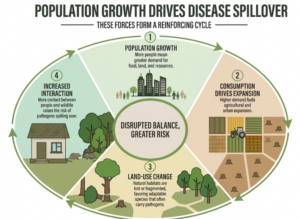
As human population grows, we increasingly encroach on previously undisturbed ecosystems, blurring the boundaries between human and animal habitats. This brings people into closer contact with wildlife species, which have long managed to coexist with specific viruses.
Peril displaced pleasure recently for the 86 passengers, along with 61 crew members, on the MV Hondius. While on a South Atlantic cruise that began in Argentina on April 1, hantavirus spread among their numbers, killing three and sickening at least eight others.
The maritime setting was unusual since hantavirus, which can have a mortality rate as high as 50%, is typically transmitted via infected rodents, suggesting passengers were exposed during land-based travel before boarding.
To date, hantavirus has been a largely localized, albeit lethal, health threat. Like all zoonotic diseases, including Covid-19, HIV/AIDS, and SARS, it’s a pathogen which has jumped from animals to humans. Zoonotic diseases now account for approximately 60% of all infectious diseases and 75% of emerging infections. Annually, these diseases cause an estimated 2.5 billion cases of illness and 2.7 million deaths.
Rising global demand for food, exacerbated by population growth, drives large-scale land-use changes, particularly in tropical regions.
In Brazil, for example, expanding sugarcane agriculture has caused rodent populations to increase substantially, resulting in greater human contact and spread of hantavirus.
Deforestation and biodiversity loss disrupt ecological balances, often favoring species that are efficient disease carriers. Together, these drivers create a deadly cycle.
The recent cruise ship incident is a microcosm of global challenges. From hantavirus to Ebola to West Nile virus, increased frequency and severity of zoonotic outbreaks is tied to human population growth and soaring resource consumption. As demand for land and food continues to rise, meeting this challenge is essential to reducing the likelihood of future catastrophic viral outbreaks.
Even though most of us don’t sojourn on cruise ships, the British economist Barbara Ward, author of the 1965 book Spaceship Earth, put it succinctly: “We are a ship’s company on a small ship. Rational behavior is the condition of survival.”
Between human overpopulation and rising consumption of scarce, often irreplaceable, resources, rational behavior often seems like wishful thinking, which, in turn, rarely leads to wish fulfillment. Disasters are inevitable unless we change course on this planetary vessel we call home.