
Hannah Evans, Senior Analyst, Population Connection
Hannah works as a Senior Analyst at Population Connection, where she focuses on public speaking and the development of open-source, academic-style resources. She also cultivates partnerships between Population Connection and international NGOs. Before joining Population Connection’s staff, Hannah worked as an adjunct professor of Women’s Studies and taught classes on gender, science, and feminist theory. She has non-profit experience working as a program developer for sustainable agriculture and public health programs in Honduras and Panama and has worked as a researcher studying food security issues throughout Southern California. Hannah holds a BA in Environmental Policy and Natural Resource Conservation and Political Science and a Master’s in Political Ecology from San Diego State University, where her research focused on sustainability labeling and ethical consumption between the United States and Nicaragua.
Sara Inés Lara, Founder & President, Women for Conservation
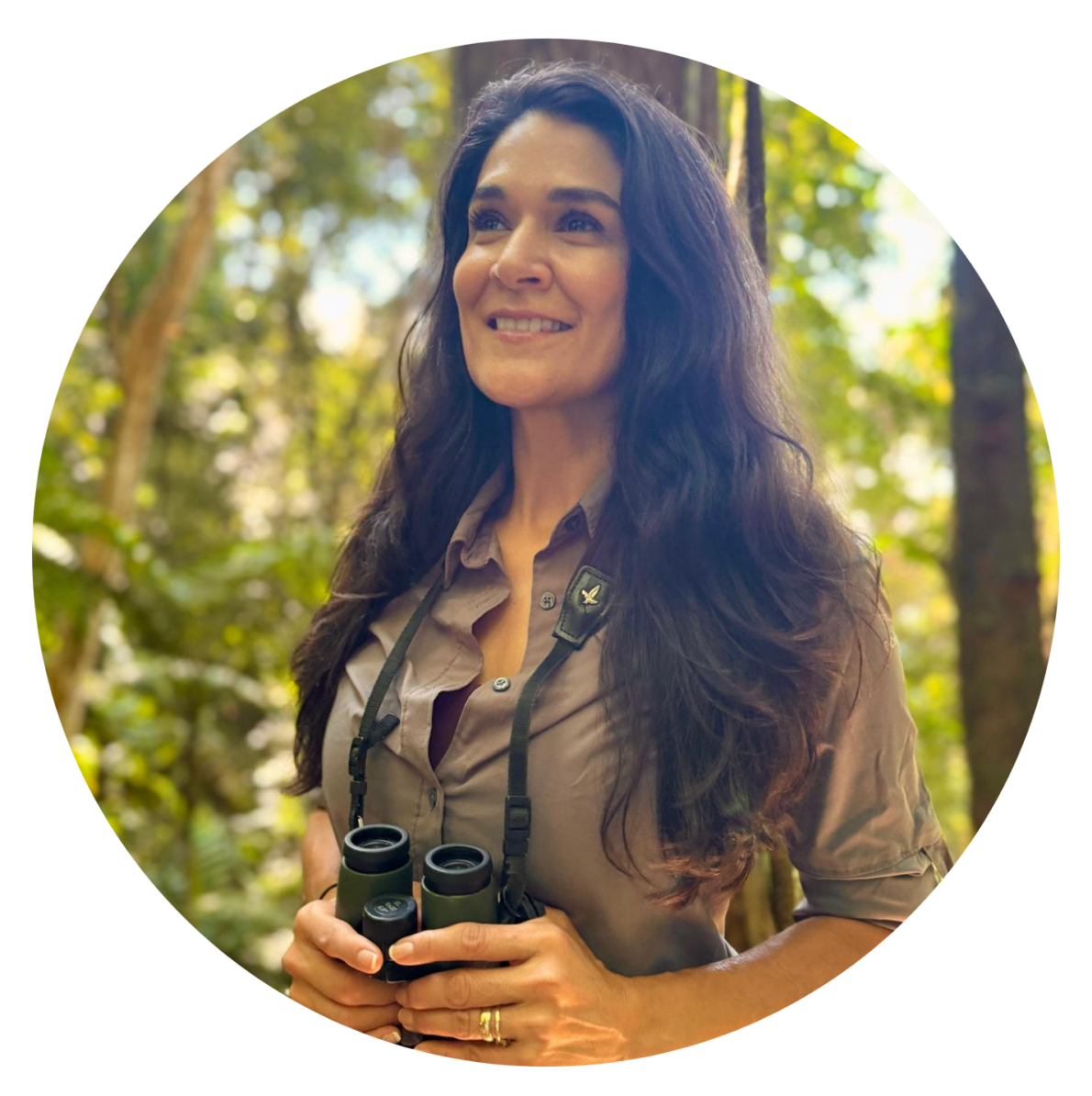 Before founding Women for Conservation, Sara was the Executive Director of Fundación ProAves, a leading conservation organization in Colombia. Under her leadership, the organization established and managed 17 nature reserves to save endangered species. In 2004, Sara combined her love of nature with her drive to empower women and founded Women for Conservation.
Sara’s principal interests include empowering women, preventing species extinction, safeguarding tropical habitats, and alleviating poverty. It is her life mission to protect the natural world so that we all may have the opportunity to heal through nature. Sara has been recognized as One in a Hundred Great Latin American Women by Billiken Magazine.
Isabella Cortés Lara, Executive Director, Women for Conservation
 Isabella Cortés is a passionate conservationist, committed feminist, performer, and artist of indigenous ancestry born in Popayán, Cauca, Colombia. She is the Executive Director for Women for Conservation, a nonprofit that empowers women in rural communities around Key Biodiversity Areas.
As an artist and musician, she uses her creative forces to advocate for endangered species protection, the rights of the LGBTQ community, rights of indigenous communities, reproductive rights, and the conservation of ecosystems.
She has a BS in Wildlife and Fisheries Management and Conservation Ecology from West Virginia University and a MS in Natural Resource Conservation at the University of Kent in England. Isabella also has the great honor of being the namesake for a species of hummingbird, Eriocnemis isabellae listed on the IUCN Red List as Critically Endangered.