Earth Day

We’re celebrating Earth Day all month long! Throughout April, tune in for insightful blogs, virtual discussions, and interactive social media posts to learn more about how population issues impact the fight for a sustainable future. 

Get Involved!

#MyPopulationNumber

Photo Series Project

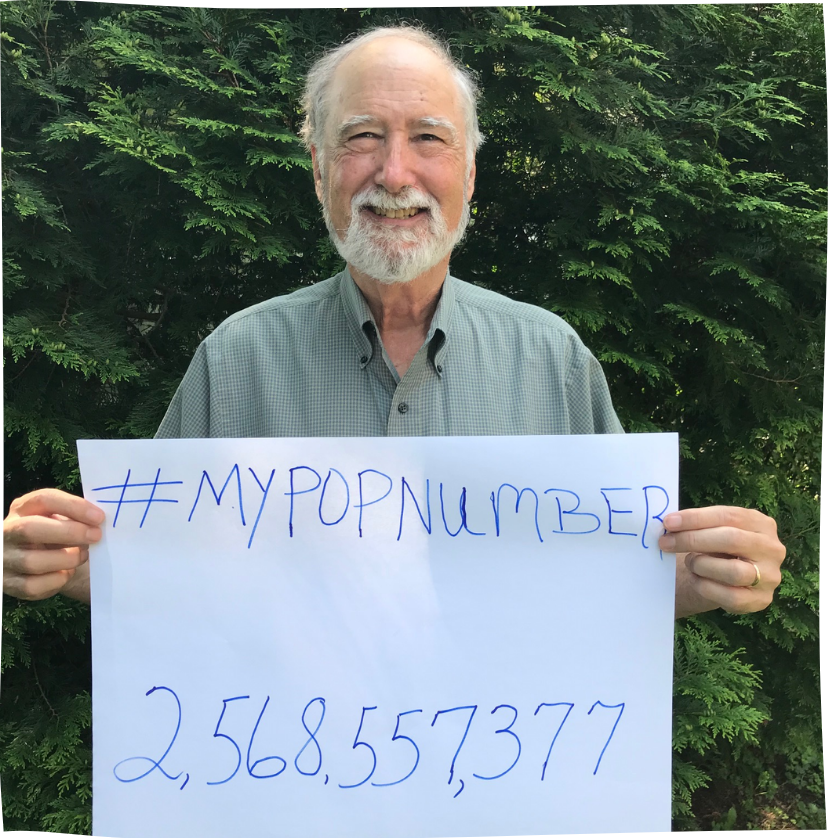
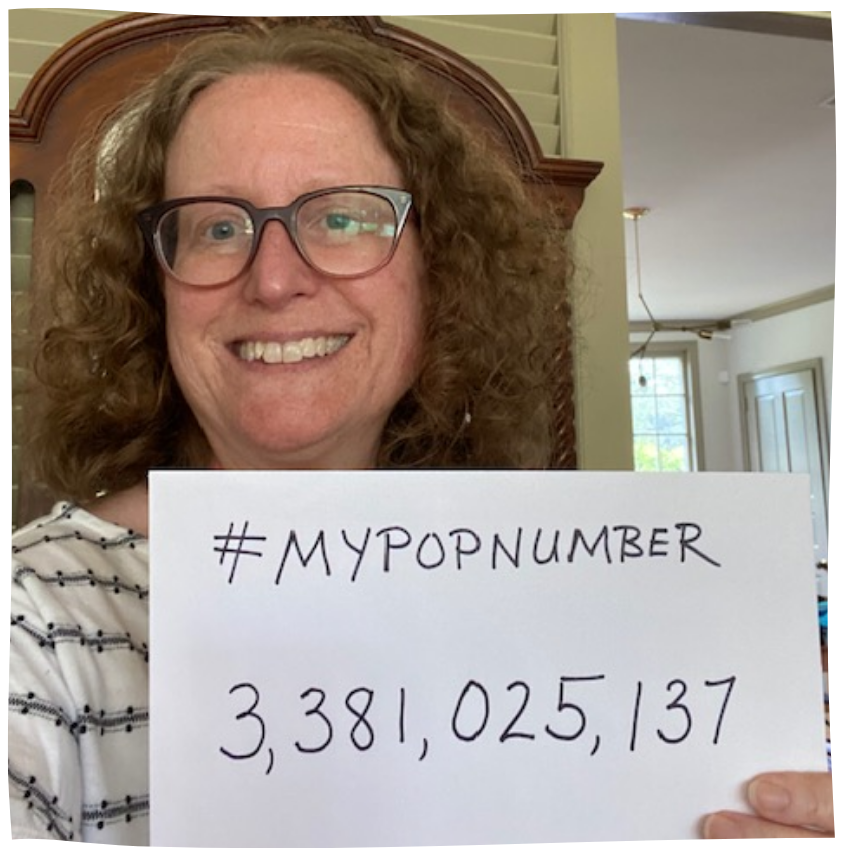
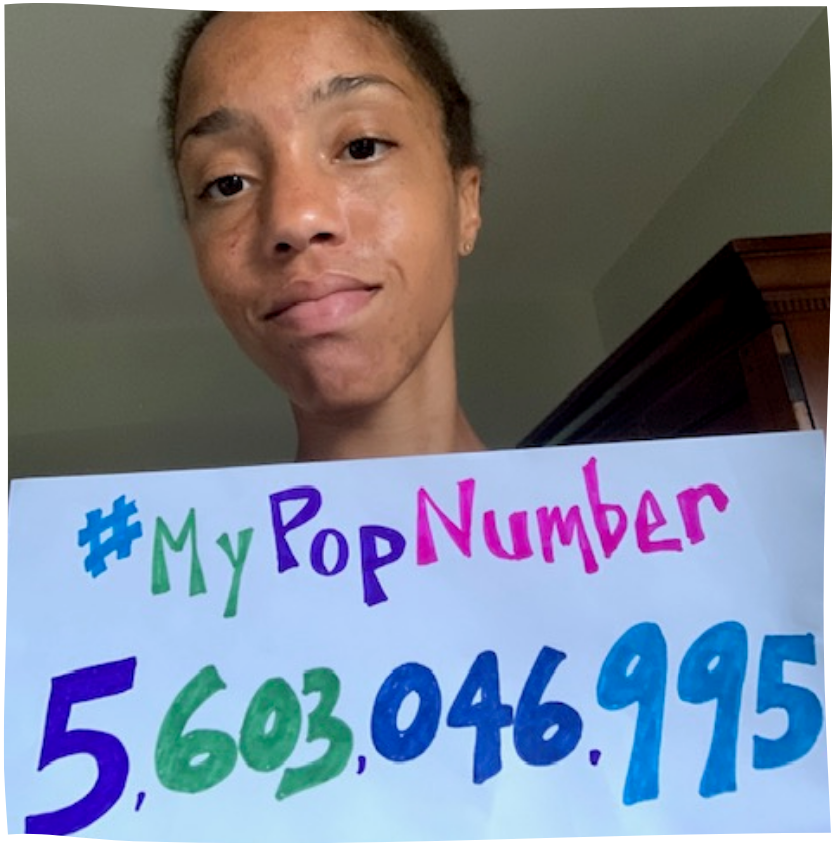
It’s important that we make the connections between population dynamics and environmental sustainability. Help amplify our efforts by participating in our #MyPopNumber photo series!

Just a century ago, the global population had not even reached two billion, a mere fraction of today’s nearly 8 billion inhabitants. Have you ever wondered where you stand amidst this exponential growth?

Become a part of this interactive project!

View Entries & Submit Your Photo!

Presentation with John Seager

The Good Crisis: How Population Stabilization Can Foster a Healthy U.S. Economy 

It’s been 10 years since our co-publication, The Good Crisis: How Population Stabilization Can Foster a Healthy U.S. Economy. A decade later, we’re still making the same argument: lower fertility rates are good for the health and well-being of people and the planet.

Population Connection President and CEO, John Seager, unpacks how the demographic changes now underway represent an extraordinary opportunity for us to focus on creating a greater, rather than larger, society. Lower fertility rates can help solve some of our most intractable problems, avert some of the worst climate catastrophes, and create opportunities for those who are often left out of our economy.

During the event, John explored the challenge of The Good Crisis—keeping our aging population healthy, productive, and prepared for today’s technologically-focused jobs. At the same time, today’s youth must be prepared for productive futures through education, skills training, and delayed parenthood enabled by improved family planning services.

Contact the Membership Relations Team at engage@popconnect.org to request a hard copy of The Good Crisis, while supplies last!

Date: April 22nd, 2026

John Seager, President and CEO, Population Connection

John has been a guest lecturer at more than 80 colleges and has spoken to numerous environmental, religious, and community groups all across the U.S. on the environmental and human costs of rapid population growth.

He was appointed to the U.S. Environmental Protection Agency by the Clinton Administration and also served as Chief of Staff for U.S. Representative Peter H. Kostmayer (D-PA), a senior member of the House Interior and Foreign Affairs Committee. A veteran of more than 50 political campaigns, John has authored numerous op-eds and articles on various aspects of population growth. He holds a bachelor’s degree in political science from Trinity College in Hartford, CT.

Contact John: john@popconnect.org

UN Commission on Population and Development 

Demographic and Contraceptive Research, Technology, and Education to Support Sustainable Population Dynamics

We hosted an official side event for the UN Commission on Population and Development, fifty-nineth session. This year’s theme is “Population, technology and research in the context of sustainable development.”

Demographic, health, and geospatial environmental research has stalled due to devastating funding cuts. As a result, there is a deficit of current, high-quality data, thwarting efforts to address pressing sustainable development challenges, all of which are exacerbated by population growth.

Filling knowledge gaps among policymakers and journalists is crucial to building support for funding demographic and contraceptive research and technological developments. Education on demographic data, trends, and dynamics, and on barriers to contraceptive use, is imperative to achieve progress on these issues, which are intimately intertwined with the UN’s Sustainable Development Goals. Author, former journalist, and current Population Connection board member Robert Engelman explored this topic during an interactive discussion.

Date: April 14th, 2026

Robert Engelman, Senior Fellow, Population Institute

Robert Engelman is an American author and former journalist who writes about the environment and population. He served as vice president of the Worldwatch Institute from 2007 to 2011 and as its president from 2011 until 2014. His book Intending Eden: Parenting, Population, and the Planet, an update of an earlier work, will be published in the spring of 2026.

Engelman began his career as a newspaper reporter, working for the Associated Press out of Mexico City in 1977. He subsequently worked for the Kansas City Times in Kansas City and Washington, D.C., and then for the (Denver) Rocky Mountain News as its Washington correspondent. He later joined the national reporting staff of Scripps Howard News Service, eventually serving as its science, health, and environment correspondent.

In 1992, Engelman left journalism and founded a research program on population and the environment at Population Action International (PAI). He later became vice president for research at PAI. In 1997, he was among the founders of the Center for a New American Dream and served until 2007 as chair of its board of directors. While at PAI, Engelman and colleagues published reports on the linkages of population dynamics and environmental change, one of which led to a paper published in the journal Nature. In 2000 and again in 2002 and 2003, Engelman served on the faculty of Yale University as a visiting lecturer on population and the environment. Since 2018 he has served as a Senior Fellow with the Population Institute, writing on demographic and environmental change and contributing to projects for the organization.

Engelman received his Bachelor of Arts degree from the University of Chicago and his Master of Science from the Columbia University Graduate School of Journalism, which in 1976 awarded him a Pulitzer Traveling Fellowship

Explore Our Resources

A core part of our mission is informing the public about population trends, reproductive health, and environmental sustainability. As we navigate uncertain times, the need for accurate information is more important than ever—especially in a media landscape saturated with persistent misconceptions about population issues and pronatalist messaging.

Quarterly Magazine

Population Connection magazine is our quarterly publication, distributed to our network of 40,000 supporters, every member of Congress, and about 3,000 public and university libraries.

Our members and subscribers have been requesting for several months that we dedicate an issue of Population Connection magazine to the role of religion in people’s family planning and childbearing decisions. This edition features an article by Kirsten Stade that explores the nuanced relationship religious followers have (at the population level) with their respective religions’ texts and leaders when it comes to official pronouncements on birth control and family formation.

Read the March Issue

Media Responses and Appearances

Our team monitors news coverage closely and responds swiftly with op-eds, letters to the editor, and press statements to make our voice heard and correct any inaccuracies. Doing so ensures that population perspectives aren’t omitted from discussions on sustainable solutions and global challenges.

We encourage all our members and supporters to make their voices heard! Read our responses to population related headlines and explore our media guide for advice on how to send in your own letter to the editor!

Our Responses to Media Headlines

Catch up on our blog

Read More

Earth Day every day: Four things we must do to be better Earthlings

The very first Earth Day helped launch the modern environmental movement, but humanity’s onslaught on the planet is sadly worse than ever before because we’ve failed to tackle the root…

Read More
Read More

Experts: Low fertility may be good for the economy

While governments around the world are fretting over declining birthrates, experts are increasingly arguing that this fear is unwarranted and that low fertility may in fact bring economic benefits. Demographers…

Read More