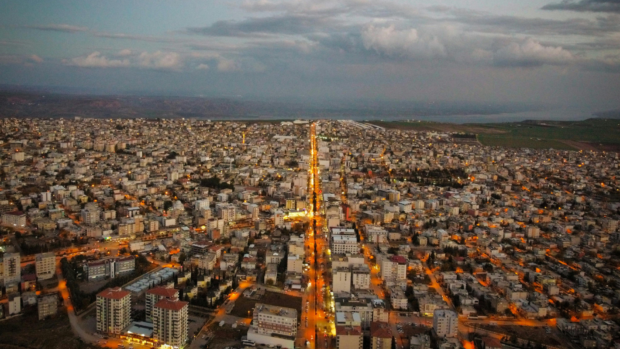
A new study published in the journal Sustainable Development makes the case for gradually shrinking our (still growing) population of 8.3 billion to 4 billion or fewer by 2200, demonstrating why reduced population pressure is key to achieving sustainability.
The neglected population factor
Alongside increasing per capita consumption levels, global population growth is a leading driver of environmental degradation, yet international policy efforts to tackle global crises, from climate change to resource depletion to biodiversity loss, do not include measures to reduce human population pressure.
This is unfortunate, because the most effective way to end population increase is to empower women and girls by removing barriers to family planning and education — a solution that is morally essential in its own right, yet still severely underfunded.
 In their paper, Keegan et al. demonstrate strong correlations between global population growth and eight environmental metrics from 1970 to 2020. Their analyses suggest that for six of these metrics — biodiversity loss (as measured by the Living Planet Index), CO2 emissions, energy use, ecological footprint (a measure of natural resource use), freshwater use, and pesticide use — population size had a larger impact than per capita consumption. (The other two metrics studied were mineral extraction and plastics production.)
For all eight metrics, the researchers highlighted periods during which per capita impact actually decreased, meaning harmful trends would have at least temporarily halted or reversed had there been no population growth. Two metrics, ecological footprint per capita and freshwater use per capita, have declined since 1970, meaning we would have seen a long-term improvement in these measures at the global aggregate level in the absence of population growth.
Projecting future impacts under different population scenarios
Under its medium (most likely) scenario, the United Nations (UN) Population Division projects that our population will peak in the 2080s, at around 10.3 billion, and decline very slowly to 10.2 billion by the end of the century.
Keegan et al. used three different scenarios with higher and lower fertility rates (the number of births per woman) to forecast how these might affect the eight environmental metrics in 2100 and 2200. These scenarios include the UN’s illustrative high and low fertility variants, which assume every other woman has one more, or one fewer child, respectively, than projected under the medium scenario. The third scenario used in the analysis is an optimistic projection developed by researchers at the Institute for Health Metrics and Evaluation (IHME), which assumes the Sustainable Development Goal (SDG) targets related to family planning and girls’ education are met by their 2030 deadline.
Using the equations describing the plotted relationship between global population size and the levels of each metric from 1970 to 2020, the authors made “cautious projections” for 2100 and 2200.
Under the UN’s high fertility scenario, the world population would grow to 11.4 billion by 2100 and 21.2 billion by 2200. It’s important to note that the UN’s recent projections only extend to 2100 — the 2200 figure was derived from a 2004 publication. Due to extremely high uncertainty, far-future projections should be taken with a grain of salt.
Keegan et al. state:
“Even the 11.4 billion projection for 2100 might deplete [the Living Planet] Index to half its current value and produce a world with nearly double the current CO2 emissions, energy and pesticide use, and quadrupled plastics waste.”
The UN’s low fertility scenario would result in 9 billion people by 2100 and just 3.2 billion by 2200, while the “fastest progress” IHME scenario would lead to 6.9 billion people in 2100, and 4.1 billion in 2200.
A rights-based path that could more than halve the population by 2200?
 For projections to 2100, only the IHME scenario shows recovery from adverse environmental trends. The authors recommend pursuing this scenario, arguing that it “could be achieved quickly and non-coercively, by fulfilling women’s and couples’ unmet needs for reproductive health services and by improving girls’ educational opportunities, especially in poorer countries.”
Globally, 259 million women who want to avoid pregnancy are not using modern contraception, and almost half of partnered women in low- and middle-income countries still have no decision-making power over their own bodies. One in five girls are married as children, which usually leads to school dropout and teen pregnancy.
The authors point out that rapid fertility decline has already been achieved in areas where women can complete their education, use contraception, and are free to decide how many children to have.
“Over the past 25 years, global total fertility dropped from 2.75 to 2.2. Continuing that drop for another 25 years brings us to a global average of 1.75 children per woman. We are already slowly progressing toward such a rate by the sum of billions of individuals’ choices; this could be accelerated with the right non-coercive policies and support.”
A world of 4 billion is nothing to fear — our population stood at that level just over 50 years ago, around the time when we started entering ecological overshoot. Thus, many estimates of a sustainable world population size are actually lower than 4 billion. If fertility rates are below the replacement rate from 2200 onwards, future generations would see further population shrinkage, which could be helpful for the environment.
Degrowth for a sustainable future
A separate analysis published in Environmental Research Letters earlier this year found that Earth might only be able to maintain a maximum of 2.5 billion people living at a comfortable, economically secure living standard over the long term.
In a press release, lead author Corey Bradshaw stressed,
“Smaller populations with lower consumption create better outcomes for both people and the planet. The window to act is narrowing, but meaningful change is still achievable if nations work together.”
The paper by Keegan et al. also recommends tackling excessive per capita impacts, stating that “ever-growing wealth and consumption are not ecologically sustainable, and the sooner our societies grapple with this inconvenient truth, the better.”
“But what about the economy?”
While it’s not hard to see how our planet and its future generations would benefit from degrowth in population and consumption, governments and economists are frantically pursuing continued growth. Due to fears of economic slowdown driven by population aging and decline, countries with below-replacement fertility are actively trying to increase birthrates when they should instead be focusing on adapting their societies and economies to an absence of growth.
Keegan et al. point out that these economic fears are not well-founded:
“From 1970 to 2020, the percentage of the working age population declined, globally, from ∼77% to ∼55%. During the same period, the global GDP per capita (in constant 2015 US$) increased from $4,960 to $10,569.”
Indeed, there is a growing body of research demonstrating that economies can thrive in the absence of population growth. And of course, it would be wise to remember that continuing on our growth trajectories indefinitely is not actually possible on a finite planet, as this would inevitably lead to collapse.
The situation is dire — we’ve already transgressed seven of nine critical planetary boundaries, endangering all life on our precious planet. Surely, a rights-based, gradual shrinkage of the human enterprise is hugely preferable to triggering irreversible and devastating tipping points.