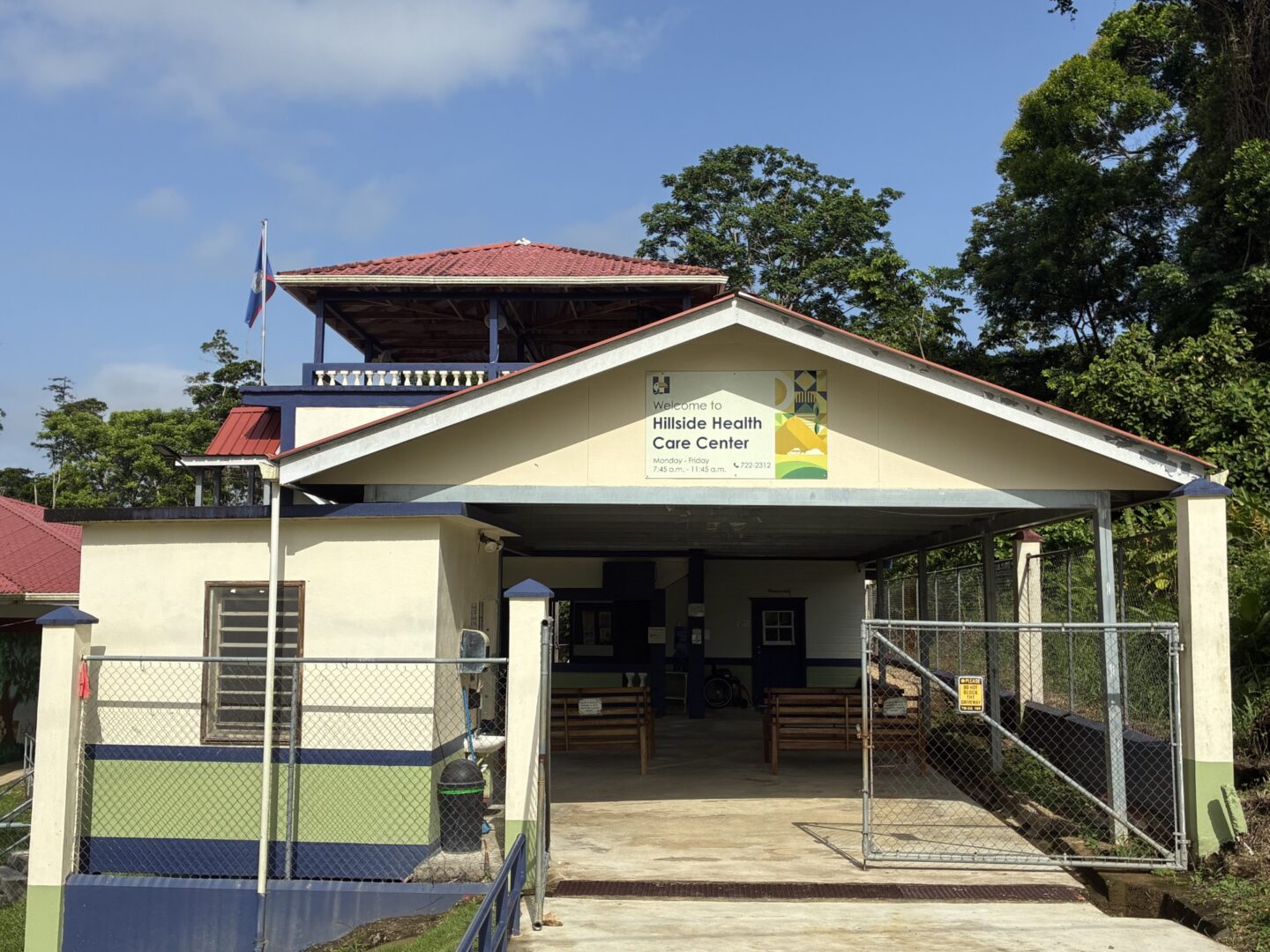
Entrance to Hillside Health Care in Punta Gorda, Belize. Photo: Sydnie Stocks
Public Health in Belize: Experiences and Insights in the Field
Written by Sydnie Stocks |
Published: October 23, 2026
Sydnie Stocks, Special Gifts Officer at Population Connection, is a Master of Public Health (MPH) candidate at the University of Arizona, studying Global Health. Here, she reports on her work experience at a health clinic in rural Belize.
I’m nearing my eighth work anniversary at Population Connection, and what has made the greatest impact on me during my time here is the interconnectedness between population dynamics, public health, and the environment. Population Connection’s work in advocacy, education, and global partnerships inspired me to pursue a master’s degree in public health, with a focus on sexual and reproductive health care globally.
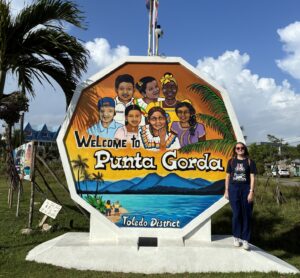
Sydnie with the Welcome to Punta Gorda sign. Photo: Sydnie Stocks
Earlier this summer, I was awarded a scholarship through the University of Arizona’s (UA) Global Health Institute (GHI) Scholars program to obtain applied practice experience in Punta Gorda, Belize. In collaboration with Hillside Health Care, a nonprofit medical clinic providing free healthcare services in the resource-limited setting of southern Belize’s Toledo District, I supported the THRIVE-Belize project, Developing a Teen Health Program: Integrating Literature, Research, and Community Voices.
In mid-July, I was off to Punta Gorda and headed to Hillside Health Care, where I would spend the next four weeks. In addition to its patient services, Hillside offers supervised clinical experiences for students completing medical rotations. My fellow U of A student and research partner, Carly Johnson, and I stayed in a dorm on Hillside’s property along with 12 other students from a variety of disciplines, including physician assistants, pharmacy, and physical therapy. Before beginning our field activities, Carly and I spent time learning about the demographics and social determinants of health affecting people in Belize’s southernmost district. This background provided important context for our work and helped us better understand how factors such as geography, natural and financial resources, and living conditions can influence health outcomes.
The Local Context
Belize has the lowest population density in Central America, with a total population of approximately 441,500. The Toledo District, with a population of around 34,700, is the poorest district in the country and is predominantly rural. Punta Gorda, the district capital, has roughly 6,800 residents. An estimated 60.3% of people living in the Toledo District experience multidimensional poverty. Belize is a diverse, multicultural country. Its population includes Maya communities, including Mopan and Q’eqchi’, as well as Garifuna, Creole, Mestizo, and East Indian communities. It is the only country in Central America where English is the official language, although most people more commonly speak one or more of the six regional languages/dialects.
These demographic and geographic factors are important considerations when evaluating how healthcare is delivered in the Toledo District. Accounting for cultural and linguistic differences, financial barriers, limited clinic supplies, and the challenges of providing services in rural communities is necessary for effective health care delivery in the area. Learning about the limitations of healthcare delivery in Punta Gorda highlighted some major gaps, especially in reproductive and maternal care. For example, the Punta Gorda Community Hospital, the town’s only hospital, has limited capacity to manage severe cases and maternal emergencies. In the event of a pregnancy-related emergency requiring specialized care, women must travel more than two hours by road to receive lifesaving services.
Hillside Health Care: Expanding Access to Care
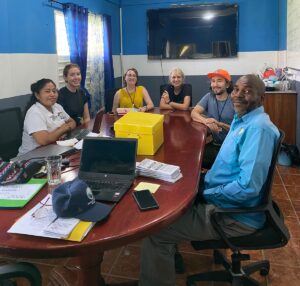
The THRIVE Belize Team meeting with the Department Of Youth Services Director Mr. Abdul Nunez (blue shirt), and Coordinator Ms. Seria Paw (white shirt). Photo: Sydnie Stocks
This is where Hillside Health Care helps fill important gaps in the local healthcare system. Although modest in size, the clinic provides a wide range of primary care services to the community. Its facilities include six patient rooms, a small laboratory, a pharmacy, and a physical and occupational therapy center. The clinic serves people seeking care throughout the Toledo District.
Beyond its on-site services, Hillside conducts home health visits for people in Punta Gorda, provides public health outreach and education at local schools and community events, and operates mobile health clinics in remote villages. Collectively, Hillside provides more than 10,000 clinical and outreach services annually.
During my time there, the most common patient diagnoses included diabetes, upper respiratory infections, and hypertension. Twice as many female patients as male patients were seen during this period, as well as a significant number of children between the ages of 0-10. On the days I was shadowing at the clinic, a common patient pairing I observed was a mother with her young child. Mothers frequently sought care for pelvic pain, as well as family planning services, which at Hillside were limited to oral contraceptive pills and the Depo-Provera injection. Meanwhile, their children presented with gastrointestinal complaints or various infections requiring antibiotics.
In a few cases of patients experiencing pelvic pain, they were advised to wait approximately four months for a volunteer OBGYN specialist to visit Hillside. This made it really sink in that prenatal and reproductive care in the region largely depends on a referral system. To access this specialized care, patients must rely on visiting volunteer specialists, travel to other facilities, or pay for private care.
Participating in these activities as a public health student expanded my understanding of the importance of comprehensive healthcare. It was also eye-opening to shadow medical staff and learn from professionals across different disciplines. Seeing these services in practice helped me better understand how clinical care, public health education, and community outreach can work together to address healthcare needs.
THRIVE-Belize: Integrating Research and Community Voices
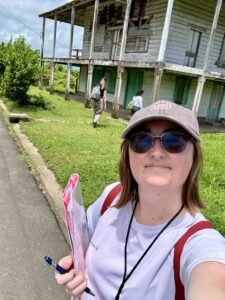
Door-to-door data collection administering surveys to teens and their parents. Photo: Sydnie Stocks
A primary goal of my internship was to support the THRIVE-Belize feasibility study. Prior research conducted by the THRIVE-Belize team with approximately 500 students at Toledo Community College, a public high school in Punta Gorda, identified a strong need for additional support networks for young people. In response, THRIVE developed a youth-centered life-skills curriculum focused on topics such as mental health, stress management, healthy relationships, and reproductive health. Our role as student researchers was to collect feedback from community stakeholders including students, parents, teachers, and community leaders to better understand their perspectives on the proposed program.
Our fieldwork focused largely on door-to-door data collection. This was one of the most valuable ways to learn about the community firsthand and better understand the daily environments and experiences of adolescents and families in and around Punta Gorda. Because we were working in a rural area with limited transportation and resources, much of our fieldwork was conducted on foot. We spent our days walking through different communities, speaking with residents, answering questions, meeting with local organizations and community leaders, and collecting survey responses. We asked participants what they thought about introducing a life-skills program for adolescents, whether they believed education on mental health, reproductive health, and stress management was needed, and whether they thought local youth and the broader community would embrace the program. The research process was highly collaborative, and we were grateful for the opportunity to gather feedback and conduct interviews with local stakeholders, including representatives from the Department of Youth Services, Punta Gorda Community Hospital, and youth-focused nonprofit organizations.
Mobile Health Clinics: Bringing Care to Rural Communities
As mentioned earlier, Hillside’s mobile health clinics help expand access to healthcare in rural villages throughout southern Belize. During my third week, I joined the team for a mobile clinic in Barranco, a predominantly Garifuna village on Belize’s southern coastline, approximately two hours from Punta Gorda. Although Barranco is geographically distant from Punta Gorda, the village sends students to Toledo Community College, making it important for us to seek input from this community as part of our research. Our team included a nurse, two pharmacy students, four physician assistant students, a resident physician, and two public health students. For these clinics, Hillside transports its own supplies, including medications, and establishes a temporary clinic in the village community center.
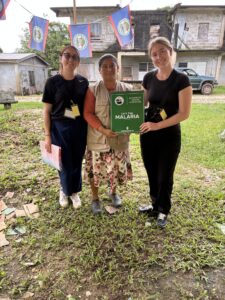
Sydnie (left) and Carly (right) with the Barranco village community health worker (center). Photo: Sydnie Stocks
While in Barranco, Carly and I met with the village’s designated community health worker to gather feedback on the THRIVE curriculum and learn more about her perspectives on adolescent health needs. One of the most memorable moments of the experience was joining the community health worker to present information about malaria prevention to patients attending the mobile clinic that day. This experience reinforced the importance of meeting people where they are, adapting to local circumstances, and finding creative ways to deliver health education and services. It also demonstrated how partnerships with community health workers can help connect healthcare providers with the people they serve.
Reflections: Connecting Public Health Education With Practice
Being selected as a GHI Scholar gave me the opportunity to apply what I have learned through my work at Population Connection and my MPH program to real-world public health challenges. It also deepened my appreciation for the role of collaboration, cultural awareness, and community engagement in developing effective public health initiatives. The experience allowed me to grow personally and professionally while reinforcing my commitment to health equity and advancing sexual and reproductive health globally.
Preparing girls for menarche and fighting period poverty: Q&A with FlowReady
Through our Global Partners program, Population Connection supports a growing number of grassroots organizations around the world working to increase access to education, public health and family planning services. Their…
A women-led movement for a better future: Women for Conservation field report
Population Connection Senior Analyst Hannah Evans reports on a site visit to El Dorado Nature Reserve in the Sierra Nevada with Women for Conservation, our Global Partner based in Colombia.…