Written by Olivia Nater |
Published: March 17, 2026
Our team at Population Connection is saddened by the passing of our co-founder and distinguished scientist, Dr. Paul R. Ehrlich, on March 13 at the age of 93.
Population Connection, previously known as Zero Population Growth, or ZPG, will be turning an impressive 60 years old in 2028. To prepare for the occasion, I reached out to Ehrlich and his wife, Anne, just last week, asking if they would be willing to do an interview reflecting on the significant role they’ve played in the population movement over the decades. A few days later, we learned that Ehrlich had sadly passed away. See our statement here.
I’m kicking myself for not reaching out to Paul Ehrlich sooner, as there was much I wanted to talk to him about. For example, it sometimes feels like the population movement of the late 60s and early 70s has been flipped upside down, with more people nowadays seemingly concerned about potential future population decline than about the continued global growth we are still experiencing. I can imagine that he was just as frustrated over this new “baby bust” panic as we are.
As someone who also came from a biological sciences and conservation background, I couldn’t help but share Ehrlich’s profound concern over the state of nature. Ehrlich’s final book, ‘Before They Vanish: Saving Nature’s Populations ― and Ourselves’, co-authored with Gerardo Ceballos and Rodolfo Dirzo, is an impassioned plea to end the extermination of the amazing and unique creatures with whom we share the planet.
Ehrlich was the Bing Professor of Population Studies (Emeritus) at Stanford University, and President of its Center for Conservation Biology, which he founded. Over the course of his career, he authored or co-authored more than 50 books and over 1,100 research papers on the topics of entomology, ecology, evolution, and population biology, among others. Ehrlich was a member of the National Academy of Sciences, the American Philosophical Society, and a Foreign Member of the Royal Society. He won many prestigious national and international awards, including the MacArthur Prize and the Royal Swedish Academy of Sciences Crafoord Prize.
Still incredibly sharp in his nineties, Ehrlich continued to participate in interviews until just a couple years ago. These recent interviews (which can be found on YouTube and on podcast platforms) display his impressive grasp on the “metacrisis” ― the foundational conditions that have given rise to the web of interconnected social and environmental crises we are experiencing today. Ehrlich was deeply critical of the growth-dependent, extractivist systems that are fueling climate change, biodiversity loss, resource depletion, and pollution, as well as poor health and extreme inequalities. He was also outspoken about the evils of misogyny and the right of women to experience the same opportunities and level of respect as men.
His and Anne’s 1968 book, The Population Bomb, which thrust Ehrlich into the pop culture spotlight, was certainly problematic, particularly for suggesting that coercive population control might be necessary if voluntary methods fail. However, contrary to accusations by many of his critics, Ehrlich never claimed that human population growth is the sole driver of environmental degradation. With physicist John Holdren (who later served as President Obama’s science advisor) Ehrlich developed the IPAT equation, which describes environmental impact as the product of three factors: Impact (I) = Population (P) x Affluence (A) x Technology (T).
Ehrlich also resented accusations of racism, having led sit-ins to desegregate restaurants in Kansas as a young student, and having co-written a book (The Race Bomb: Skin Color, Prejudice, and Intelligence, 1977) that debunks the notion of biological race and racially determined intelligence. In a March 2018 interview with The Guardian, Ehrlich admitted that The Population Bomb did not adequately address equity issues and that “it needed more on women’s rights, and explicit countering of racism.” In recent years, he often pointed out that while many have accused him of claiming that there are too many poor people, he actually believes that the problem is “too many rich people.”
Edith’s checkerspot (Euphydryas editha), one of Paul Ehrlich’s study species.
Ehrlich acknowledged that the book’s scenarios about mass starvation were way off — due to the agricultural scientists he consulted not foreseeing the massive crop yield increases that would result from the nascent Green Revolution — but argued that its warnings about the potential for widespread famines, pandemics, water shortages, climate disasters, resource wars, and nuclear war devastation held true and are even more relevant today. Ehrlich even said that in some respects, The Population Bomb was too optimistic, because it underestimated the climate crisis and was unaware of the emerging threat of endocrine-disrupting pollutants.
Never one to keep provocative thoughts to himself, Ehrlich embraced accusations of alarmism. In a 2023 interview about the extinction crisis for 60 Minutes, he explained,
“I was alarmed. I am still alarmed. All of my colleagues are alarmed.”
Ehrlich was brutally honest when sharing his opinion on the Trump administration (“kakistocracy” is the term he liked to use). Far-right pronatalist Elon Musk hated Ehrlich, and the feeling was mutual. In recent interviews, Ehrlich accurately pointed out that Musk may want to terraform Mars, but in reality, he and his fellow rightwing billionaires seem to be doing their best to “Martian-form Earth.”
Ehrlich frequently highlighted that the only people who benefit from continued population growth are the “morbidly rich.” He believed in the need for deep, systemic change and redistribution of resources, as well as improving the education system. Regarding the rise of anti-immigration sentiment, he noted that the most dangerous immigrant is in fact Rupert Murdoch. We propose Elon Musk for second place.
Ehrlich made up for The Population Bomb’s neglect of women’s rights issues in recent interviews, often stressing the critical need to “give women full control over their bodies and equal rights.” He liked to repeat the feminist slogan of the 1970s, that “a woman without a man is like a fish without a bicycle.” Ehrlich criticized the withholding of foreign aid, especially for family planning, as he believed this was key to promoting better lives and sustainability in developing nations.
Whether or not people agreed with Ehrlich, we would be wise to keep in mind his warnings about the dangers of unchecked growth on a finite planet. During these crazy times of escalating wars, catastrophic heating, mass extinction, widening inequalities, and worsening resource shortages (some experts believe these are all signs of societal collapse), one could argue that Ehrlich was more of a prescient realist than a pessimist.
While we sadly won’t get to hear Ehrlich’s thoughts on our 60th anniversary, you can read his and Anne’s article for our 40th anniversary here.
The power of empathy, hope, and tireless activism: A reflection on Dr. Jane Goodall’s legacy
Our team at Population Connection is deeply saddened by the passing of the legendary ethologist and conservationist Dr. Jane Goodall. Through her decades-long field research on chimpanzees in Gombe National…
“Neo-Malthusian”? Or just cognizant of planetary limits?
If, like Population Connection and its 30,000+ members, you are concerned about the devastating impacts the huge and growing human enterprise is having on our planet, you may have been…

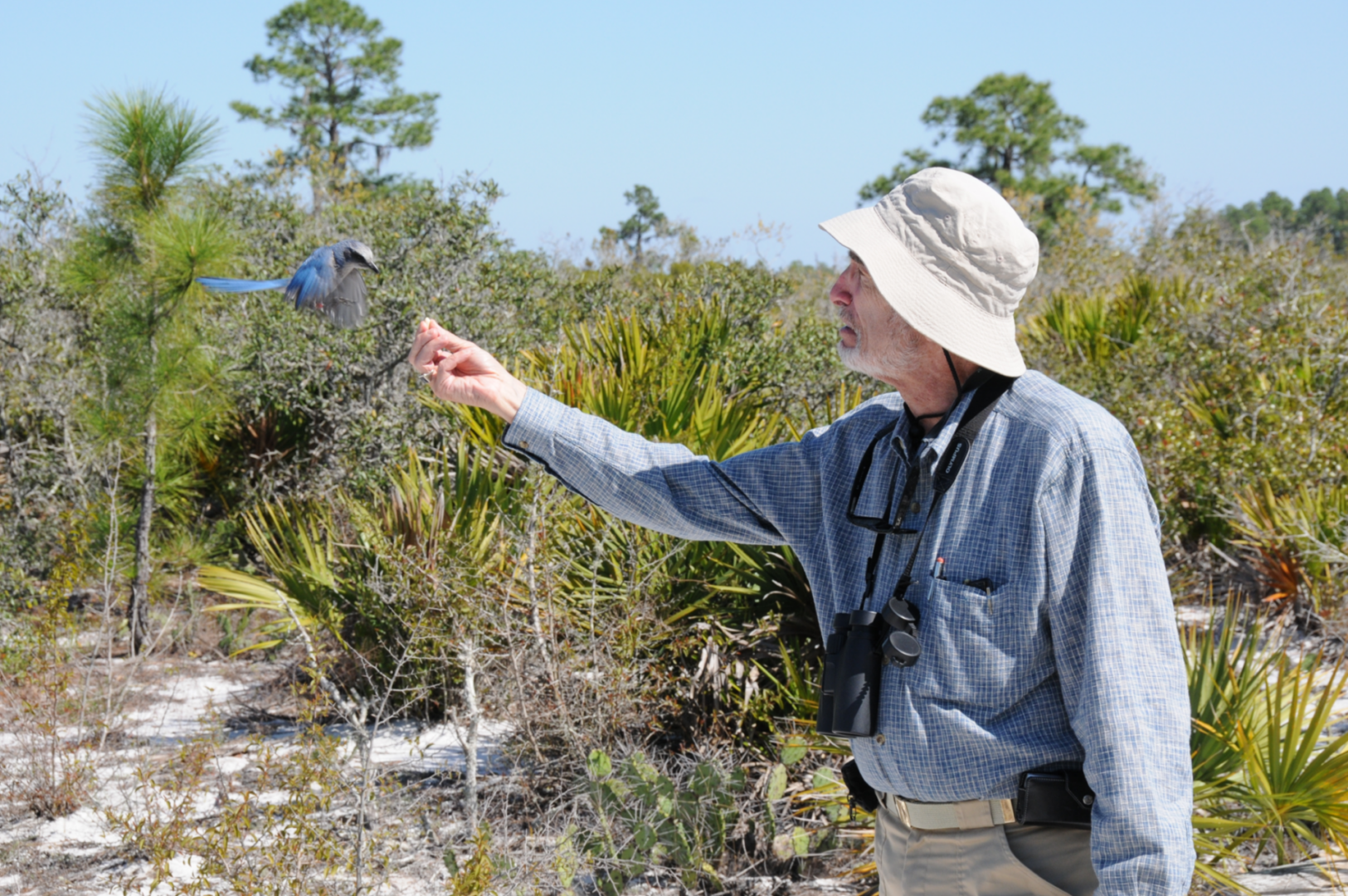
 Population Connection, previously known as Zero Population Growth, or ZPG, will be turning an impressive 60 years old in 2028. To prepare for the occasion, I reached out to Ehrlich and his wife, Anne, just last week, asking if they would be willing to do an interview reflecting on the significant role they’ve played in the population movement over the decades. A few days later, we learned that Ehrlich had sadly passed away. See our statement