Today is International Day for Biological Diversity with the theme “Acting locally for global impact.” Biodiversity loss is now so rapid that scientists have declared a sixth mass extinction, but there are many actions individuals can take to make a real difference for wild species. Let’s explore some of them.
What is the sixth mass extinction?
Species of animals and plants are currently going extinct 1,000 times faster than the normal “background” rate, creating a mass extinction event. There have been five other mass extinctions throughout our planet’s history — the previous one, the fifth mass extinction, was known as the Cretaceous-Tertiary or ‘K-T’ extinction, and occurred 66 million years ago. The cause is thought to have been a massive comet or asteroid that collided with Earth. This catastrophic event devastated the global environment and wiped out 80% of animal species, including the dinosaurs.
The reason for the sixth mass extinction, also called the Anthropocene or Holocene extinction, is human activity, amplified by our enormous population size of 8.3 billion and counting. A landmark 2019 report by the Intergovernmental Science-Policy Platform on Biodiversity and Ecosystem Services (IPBES) estimated that one million species are now threatened with extinction due to overexploitation, habitat destruction, climate change, pollution, and invasive species.
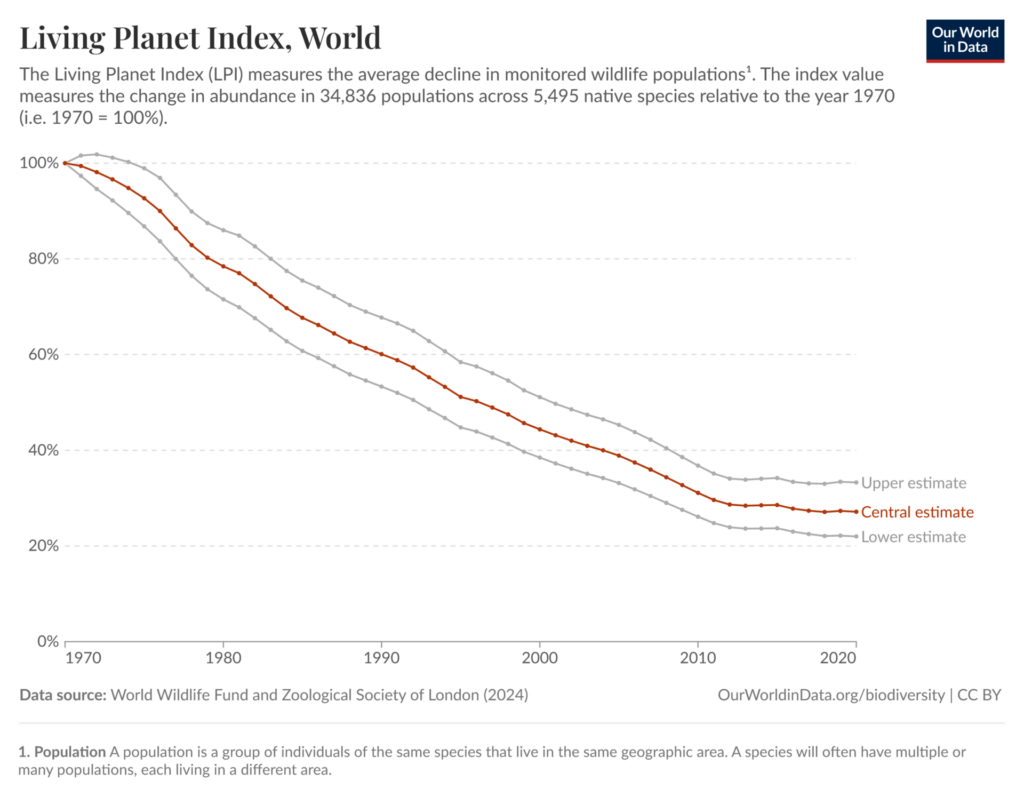
According to WWF’s Living Planet Index, wild populations of vertebrates (mammals, birds, reptiles, amphibians and fish) have plummeted by 73% between 1970 and 2020.
What you can do
The situation is dire, and just like with the climate crisis, governments are failing to take sufficient action to halt biodiversity decline, which is still accelerating. There are, however, steps we can take as individuals to make a difference in our local environments, and collectively, at the global level.
1) Consider environment-population connections
Our impact on the environment, including biodiversity, is a product of how many of us there are and how much each of us consumes.
We can limit further human population growth by supporting policies that expand access to modern contraception and empower women, and by choosing to have a small family.
2) Reduce, Reuse, Recycle
The “3 R Mantra” is relevant to all environmental challenges. The more we consume and throw away, the more we contribute to habitat loss, species exploitation, climate change, and pollution, all of which harm biodiversity.
We can help wild species by consuming more mindfully — buying less stuff and purchasing things second-hand when available, prioritizing products with sustainability certifications, avoiding single-use plastics, and recycling our waste as much as possible.
3) Eat a plant-based diet
 Almost half of all habitable land is used for agriculture and as much as 80% of this agricultural land is for raising livestock. Animal agriculture is thus a leading driver of habitat loss and deforestation. Wild mammals now make up only 5% of mammalian biomass on Earth, while 59% is livestock and 36% is humans. Wild birds account for 29% of bird biomass, while 71% is farmed poultry. Agriculture also harms wildlife indirectly by contributing to climate change and pollution.
Growing food crops for human consumption requires much less land, energy, and water than raising livestock. Thus, eating lower on the food chain, i.e. consuming more plants and less meat and dairy, is one of the most effective ways individuals can help biodiversity and the environment. To make the transition easier, those accustomed to eating meat daily can reduce their consumption gradually, such as by introducing “Meatfree Mondays.”
4) Choose sustainable transport
Human-caused greenhouse gas emissions have already increased average global temperatures by more than 1°C since pre-industrial times. Unfortunately, emissions are still rising and existing climate policies put us on track for up to 3°C of warming by the end of the century.
Climate change poses an existential threat to countless species, especially those adapted to narrow temperature ranges and areas that are warming more rapidly than the global average. The Arctic, for example, has warmed almost four times faster than the globe since 1979, causing the disappearance of sea ice which is key to the survival of Arctic mammals like seals and polar bears.
Aside from cutting back on meat consumption, another way we can limit our emissions is by choosing less polluting transport options. Reducing how much we fly, in particular, makes a huge difference to our carbon footprints. It’s also a good idea for able-bodied people to bike and walk short distances instead of driving, and to use public transport when possible. Removing cars from the road helps wildlife directly too, by reducing roadkill.
5) Avoid pesticides
Widespread pesticide use is decimating invertebrate populations, including vital pollinators. Several studies have found that the massive increase in agricultural pesticide use over the past decades appears to be the primary driver of rapid global insect decline.
You can help protect these tiny creatures by not using any pesticides in your yard, and by buying mostly organic produce, which is grown without the use of synthetic pesticides.
6) Build a biodiversity haven
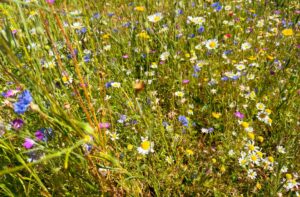 Heard of “No Mow May”? This movement to protect pollinators is probably the easiest thing you can do to help biodiversity. Manicured lawns may look neat but they are essentially biodiversity dead zones. Reducing your mowing frequency allows wildflowers (sometimes unfairly called “weeds”) to grow in your yard, providing important forage for pollinating insects.
Generally, the more you allow nature to do its own thing, the better the outcome for native species. Leaf piles, for example, provide important overwintering habitat and forage for a number of animals, including insects and amphibians, while decaying leaf matter delivers nutrients to the soil which helps species like earthworms. In summary, being lazy when it comes to yard work is good for biodiversity — a win-win!
You can of course also plant additional pollinator-friendly flowers (make sure they are not pre-treated with pesticides and that they are native to your area) and build little microhabitats for a variety of species in your green space. While there are endless options for making large yards biodiversity-friendly, it’s possible to create little havens in very small spaces too, e.g. by growing flowers on your balcony or even in window boxes, and building “bee hotels” with bamboo tubes or by drilling holes in blocks of wood.
7) Limit lights and noise
Light and noise pollution often negatively interfere with wild animals’ communication and natural behavior. Turning off lights when you don’t need them (especially outdoor ones), and minimizing the use of very loud machinery can reduce our impact on biodiversity. For example, do you really need to use that gas-powered leaf blower, arguably one of the worst inventions ever?
8) Be a responsible pet owner
Domestic dogs and cats can negatively impact wildlife. A 2013 study, for example, found that free-ranging cats may be the single greatest source of anthropogenic mortality for birds and mammals in the United States. Off-leash dogs often harass and kill wildlife too, and failure to pick up dog waste can damage natural habitats.
Dog and cat owners can minimize negative impacts by keeping pets under control when outside, and by making sure they clean up after them.
9) Influence legislation
Voting is an important way to make your voice heard and influence outcomes for biodiversity at local, national, and even international levels. You can also join coalitions that aim to protect nature in your area, and engage with local policymakers by calling your representatives, attending meetings with your elected officials, and signing or starting petitions, for example.
10) Inspire others to take action
Finally, you can inspire other people to take action for biodiversity too. The sixth mass extinction remains a widely neglected crisis, despite being just as serious as the climate crisis. If everyone wishing to make a difference teaches their friends and family members about biodiversity loss and the many, simple ways everyone can help stem the tide, we can collectively create positive change at the global level.