As the world’s population rises, so do its repercussions on the environment. Growing demands for food, water, land, and energy place mounting pressure on ecosystems already pushed to their limits. These effects aren’t felt equally: the most vulnerable regions often face the greatest environmental risks. On World Environment Day, we look at how population growth plays a complex but critical role in shaping our planet’s future, from deforestation and water scarcity to pollution and species loss.
The following sections explore ten ways increasing human numbers contribute to environmental stress, revealing how deeply our future is tied to how and where we grow.
Deforestation
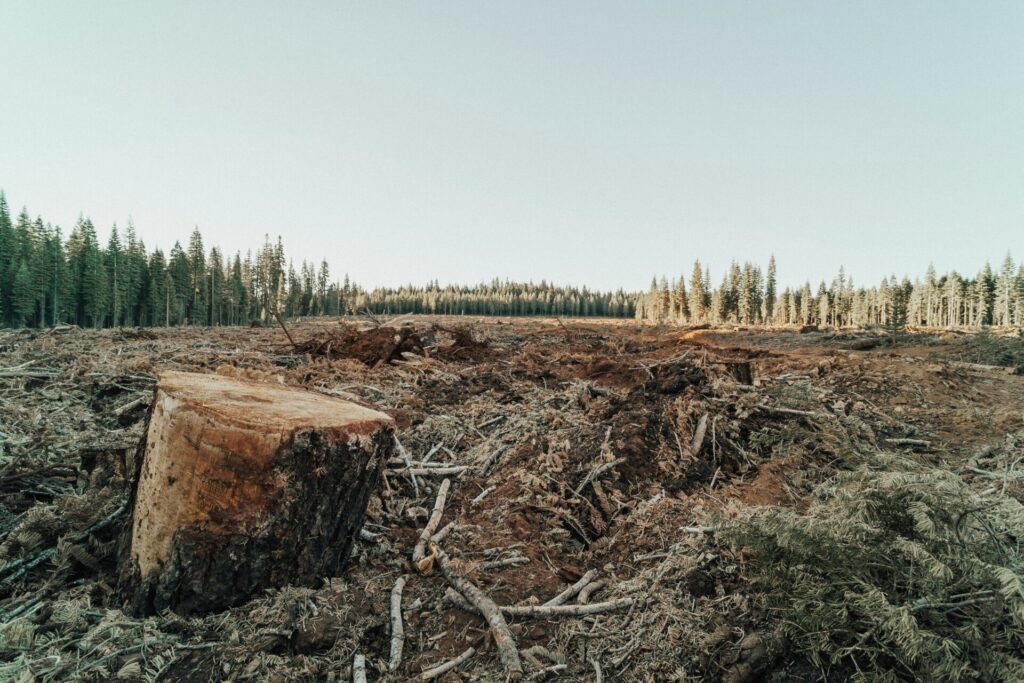
As the global population expands, the demand for land and resources intensifies, leading to significant deforestation. This threatens biodiversity due to habitat loss, disrupts water cycles by altering evapotranspiration and rainfall patterns, and contributes to climate change by releasing stored carbon dioxide into the atmosphere.
From 2001 to 2025, there was a total of 540 million hectares of tree cover loss globally. The primary drivers of deforestation include agricultural expansion, logging, and infrastructure development.
Agricultural expansion, particularly for commodities like soy, palm oil, timber, and cattle ranching, is a primary driver of deforestation. Palm oil plantations are a primary driver of tropical deforestation in Indonesia and areas of Latin America. Cattle ranching is a significant driver of deforestation in Latin America, especially Brazil.
Overfishing
As the global population continues to rise, the demand for seafood has surged, placing immense pressure on marine ecosystems. Overfishing has become a significant concern, threatening the sustainability of fish stocks and the livelihoods of communities dependent on fishing.
In 2022, capture fisheries and aquaculture production together reached 214.92 million tonnes. Of the aquatic animals, aquaculture contributed 126.94 million tonnes, while capture fisheries accounted for 87.99 million tonnes. The remaining production includes non-food uses such as fishmeal and fish oil. In recent years, aquaculture production has surpassed wild capture, highlighting a shift in how seafood is sourced.
Despite this change, the sustainability of fish stocks remains a pressing issue. The FAO reports that 35.5% of fish stocks were overfished in 2025, continuing an upward trend from previous years. Overfishing not only depletes fish populations but also disrupts marine food webs and ecosystems, leading to biodiversity loss and ecosystem damage. The overexploitation of fisheries is driven by increasing demand, technological advancements in fishing, and inadequate management practices.
Water Scarcity
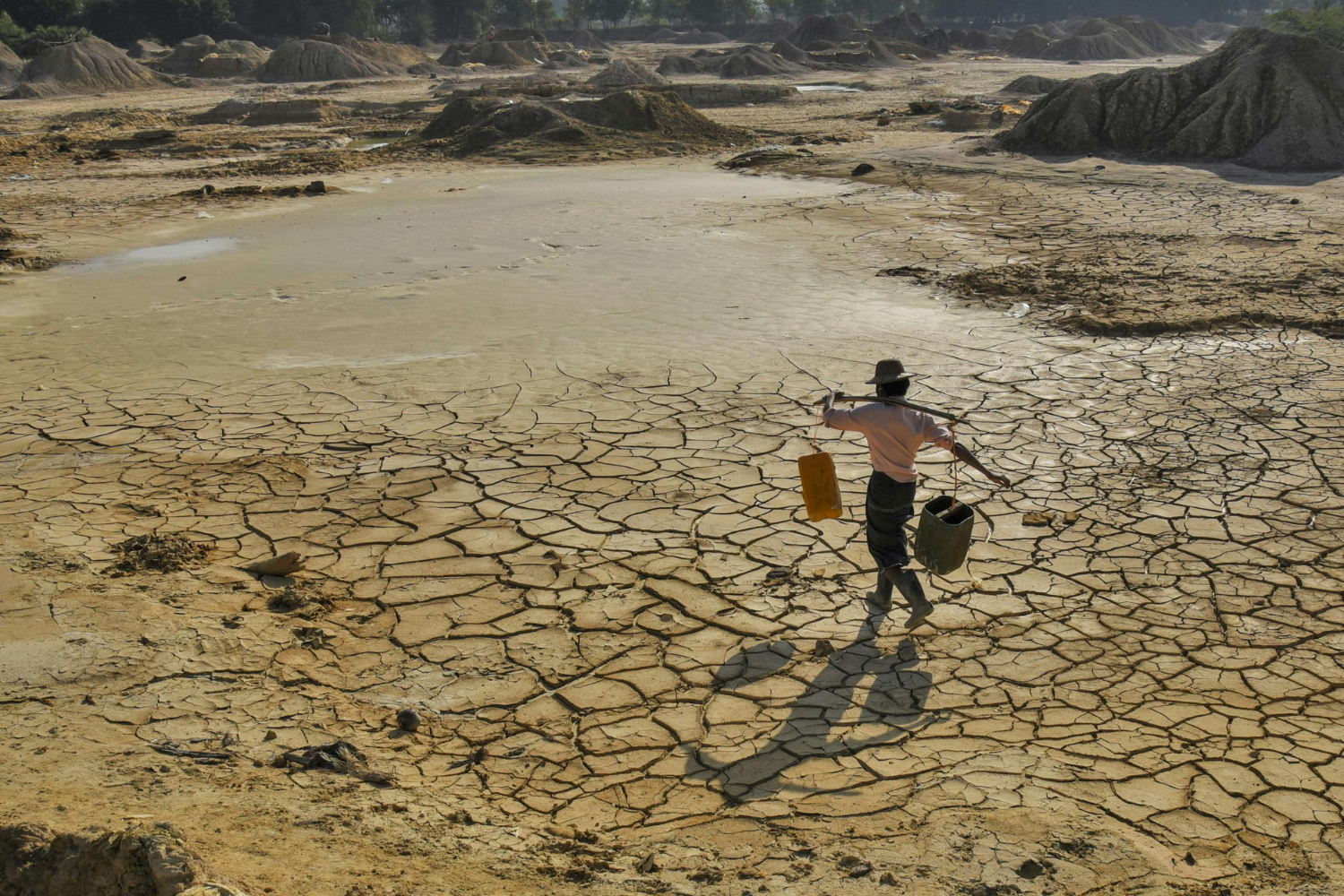
Freshwater scarcity is intensifying worldwide as population growth outpaces the natural replenishment of water sources. By 2050, an additional 1 billion people are projected to live in areas facing extremely high water stress, using over 80% of their available water resources annually.
As with deforestation, the rising demand for water-intensive goods, particularly meat, dairy, and cash crops, places additional pressure on already-strained water systems. Vulnerable communities, including rural, low-income, Indigenous, and female-headed households, are disproportionately affected by declining water availability. In India, for example, about 600 million people experienced high to extreme water stress in 2018, with critical groundwater resources depleting at alarming rates. Total water demand in India is projected to exceed renewable supply in almost every state by 2030, jeopardizing survival and agricultural output, and causing significant economic losses.
Without urgent intervention, billions may face increased food insecurity, migration pressures, and heightened risk of conflict over water access.
Food Shortages
In 2024, approximately 673 million people suffered from hunger, marking a persistent stagnation in progress toward achieving food security. Reducing short-lived climate pollutants such as methane, black carbon, and tropospheric ozone is crucial for strengthening food security, because these emissions exacerbate crop losses, disrupt growing seasons, and threaten nutrition through climate-driven extremes and air pollution.
The escalating demand for food, driven by population growth and changing consumption patterns, exacerbates the strain on agricultural systems. This is further intensified by climate-related disruptions, such as prolonged droughts and extreme weather events, which compromise crop yields and food distribution networks. Moreover, the reliance on monoculture farming and water-intensive crops contributes to soil degradation and resource depletion, undermining long-term food security.
Pollution
 Air pollution is responsible for an estimated 7 million premature deaths each year, with 99% of the global population breathing air that fails to meet World Health Organization safety standards. Outdoor pollution driven by fine particulate matter, nitrogen dioxide, and ozone is primarily linked to vehicle emissions, industrial activity, power generation, and waste management. Illnesses linked to household air pollution, often from cooking with coal or wood, were responsible for as many as 2.9 million deaths in 2021.
With the global population continuing its climb past 8 billion, total energy demand continues to rise, driving increased fossil fuel combustion, industrial activity, and air pollution, especially in countries lacking emissions standards. Low-income and marginalized communities are disproportionately affected. People living near highways, factories, or in areas without clean cooking options face greater health risks, including asthma, cardiovascular disease, and early death.
And pollution isn’t restricted to the air — it contaminates water, soil, and ecosystems, weakening public health and climate resilience.
Climate Change
Climate change continues to pose an existential threat to ecosystems and human societies. Population growth plays a complex but important role. While more people naturally increase demand for energy, housing, food, and water, it’s not accurate to say that all population growth equally contributes to greenhouse gas emissions. In fact, much of the world’s population growth is happening in lower-income regions like sub-Saharan Africa, where emissions per person remain very low. For example, the world’s richest 10% are now responsible for more than two-thirds of global greenhouse gas emissions, while the poorest 50% contribute just over one tenth of the emissions. What matters even more than the number of people (at today’s levels of consumption) is how much each person consumes. Wealthier countries use far more energy per capita — often hundreds of times more than low-income nations. The U.S., for instance, has about 4% of the world’s population but consumes 17% of global energy. Of course, as low- and middle-income countries continue to develop, and as people living in poverty rightfully start consuming more in order to have a higher quality of life, the number of people in poorer regions will matter more and more.
An additional billion people are projected to join our current population of 8.3 billion by 2040, with another billion on top of that by 2060. The climate challenge we face is twofold: a rapidly growing number of people using fossil fuels and denuding forests, and growing per capita emissions amongst those who currently consume relatively little. We must find a way to meet people’s basic needs and improve their quality of life while avoiding the high-emissions path taken by industrialized countries.
At the same time, population growth in vulnerable regions increases people’s exposure to climate hazards. Over 10% of the global population lives in low-lying coastal areas that make up just 2% of Earth’s land area, putting millions at risk from sea-level rise and storms. Many of the fastest-growing countries are also the most vulnerable to climate impacts, including 9 of the 10 most climate-vulnerable nations in sub-Saharan Africa. Approaches like improving access to education, health care, and voluntary family planning are key not just for human development but also for building climate resilience.
Solid Waste
Solid waste generation is surging worldwide, driven by urbanization, rising consumption, and population growth. Between 2020 and 2050, municipal solid waste generation per year is projected to grow from 2.1 billion tonnes to 3.8 billion tonnes, an 81 per cent increase within a generation or less. Low- and middle-income countries face growing challenges, often lacking the infrastructure to manage this waste safely. In 2020, at least 38% of global waste was mismanaged through open dumping or burning, especially in cities with limited waste infrastructure. Plastic waste remains a key concern: While high-income countries generate the most waste per capita, rapidly growing economies contribute significantly to the global total due to expanding consumer markets.
Urban Sprawl

Rapid rural‑to‑urban migration is shifting billions of people into cities, placing unprecedented pressure on infrastructure, services, and the local environment. By 2050, the global urban population is expected to grow by approximately 2.5 billion people (an increase of around 170,000 people per day). This surge often fuels low-density, car-reliant sprawl, resulting in widespread land consumption and environmental degradation. Rapidly growing cities like Mexico City struggle with inadequate water and flood management, which disproportionately affects low-income residents.
Such dynamics are accelerating: globally, the share of people living in urban areas is expected to rise from 55% in 2020 to about 68% by 2050. This transformative growth underscores the need for integrated planning that balances economic gains with sustainable land use, public services, and environmental health as cities expand.
Biodiversity Loss
Biodiversity is under severe threat as wildlife populations have plummeted by an average of 73% since 1970, reflecting extensive habitat destruction and ecological strain. Human-driven land conversion for agriculture, infrastructure, and urban growth remains the primary cause of habitat loss, with both small-scale farming and commodity expansion displacing native ecosystems.
Population growth intensifies these pressures: expanding rural populations in biodiversity hotspots contribute to deforestation and species decline.
The erosion of ecosystems not only imperils wildlife but also undermines essential services such as pollination, water purification, and carbon storage that sustain human well-being. To reverse these trends, we must prioritize conservation strategies that protect habitats, promote sustainable land use, and address underlying drivers like population and consumption.
Natural Disasters
As global populations grow and concentrate in risk-prone areas, natural disasters increasingly threaten more lives and communities. In 2024, the United States experienced a record-breaking 28 separate billion-dollar weather and climate disasters, underscoring how growing populations in hazard-prone regions are increasingly vulnerable to floods, storms, and wildfires. The “expanding bullseye” effect, in which more infrastructure and communities sit in the path of disaster, means an intensifying human toll. The rapid expansion of places like Florida’s Cape Coral/Fort Myers region amplifies dangers from storms like Hurricane Ian (2022), as more people and assets crowd into vulnerable landscapes.
Population growth also plays a significant role globally. Climate-related displacement is already affecting millions, and projected population trends in Asia and Africa suggest that without intervention, billions more will be exposed to floods, heatwaves, and drought by mid-century. Moreover, rapid growth in high-risk regions often outpaces capacity for resilient infrastructure and social safety nets, magnifying vulnerabilities.