
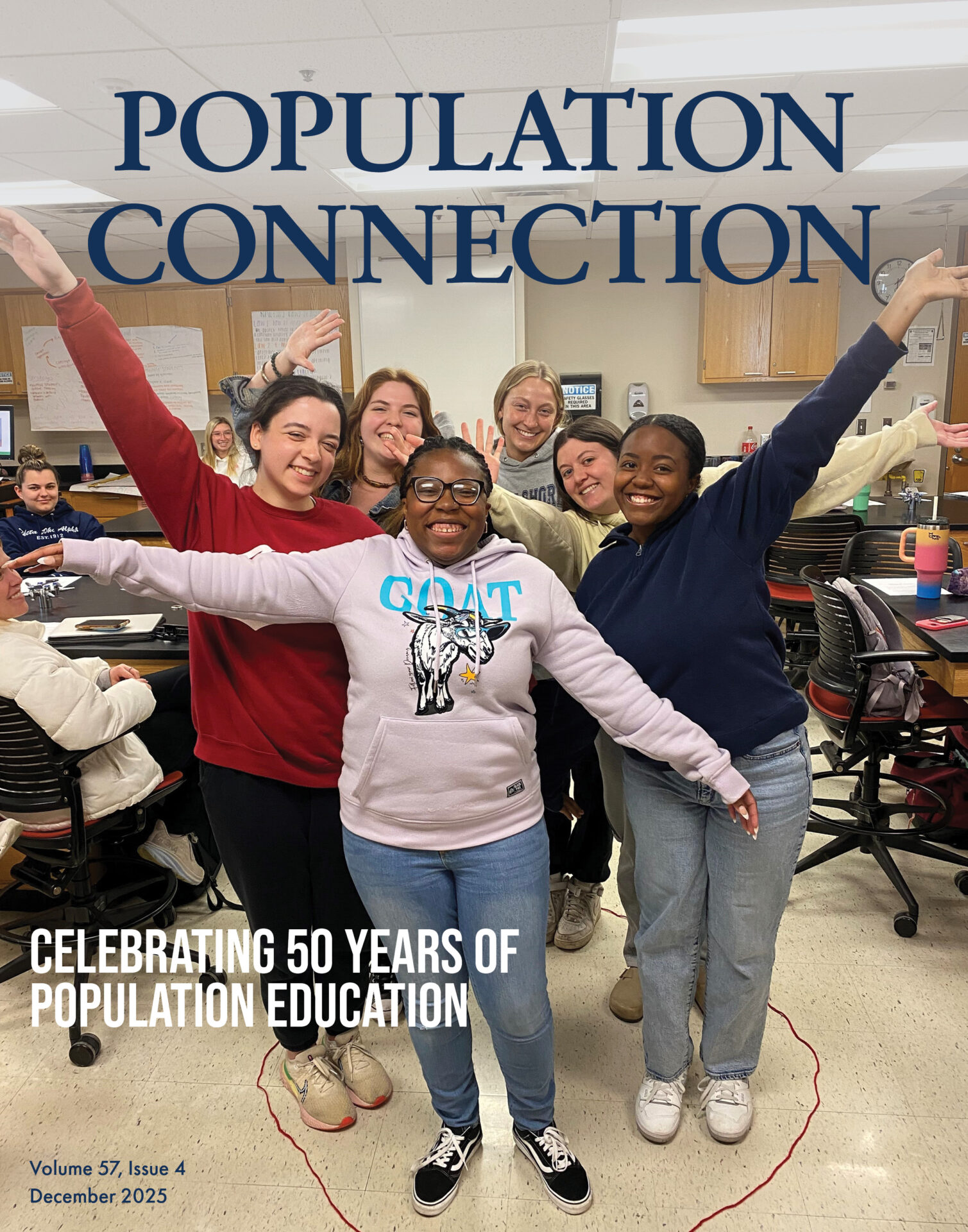
December 2025
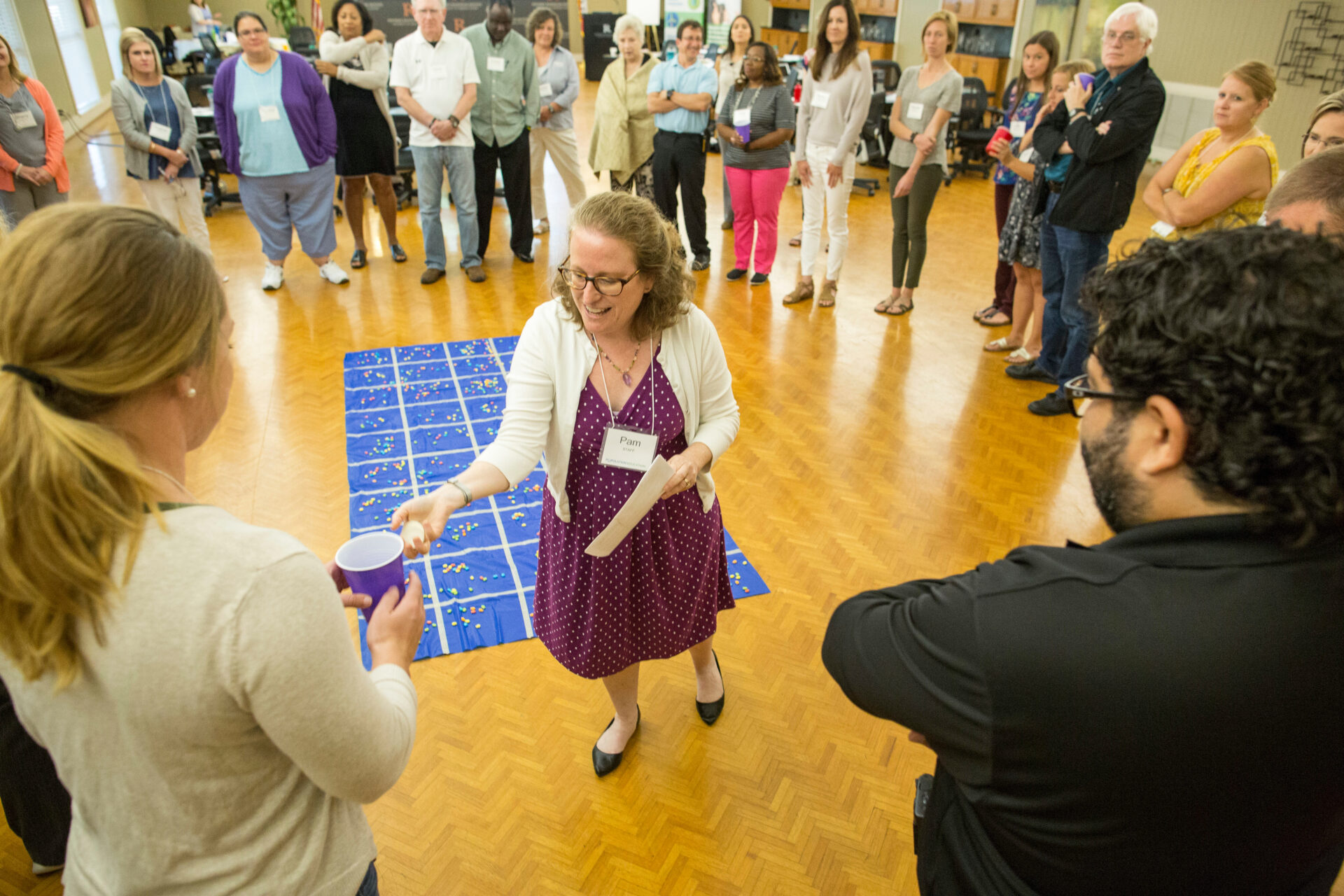
Educating young people about the impact of our numbers and consumption patterns helps them become more thoughtful future professionals, parents (if they choose to have children), consumers, and voters. Despite the importance of population literacy, however, our Population Education (PopEd) program — which turns 50 this year — is the only remaining one of its kind in the United States. With a staff of 13, a volunteer network of nearly 700 teacher trainers, and approximately 50,000 educators using our curriculum materials in their classrooms, we reach about 3 million K–12 students each year.
Cover image: Students in an Elementary Science Methods course at Indiana University role play flowering plants in the Population Education (PopEd) activity Crowding Can Be Seedy, in March 2024 | Photo by Carol Bliese, Senior Director of Teacher Programs
"PopEd stays viable as long as we keep it current. According to the UN medium projection, in 50 years, the global population will be nearing its peak. But there will always be a need for education on the delicate balance of people and the environment, and on the benefits of raising living standards and providing equal opportunities everywhere." Pam Wasserman, Senior Vice President for Education
In 2025, PopEd is the only remaining program of its kind in the United States, preparing educators to teach about human population growth and its effects on the environment and human wellbeing. But, in 1975, when Zero Population Growth (ZPG), the founding name of Population Connection, launched PopEd, universal, K–12 population education had the backing of state and national policymakers and teacher associations.
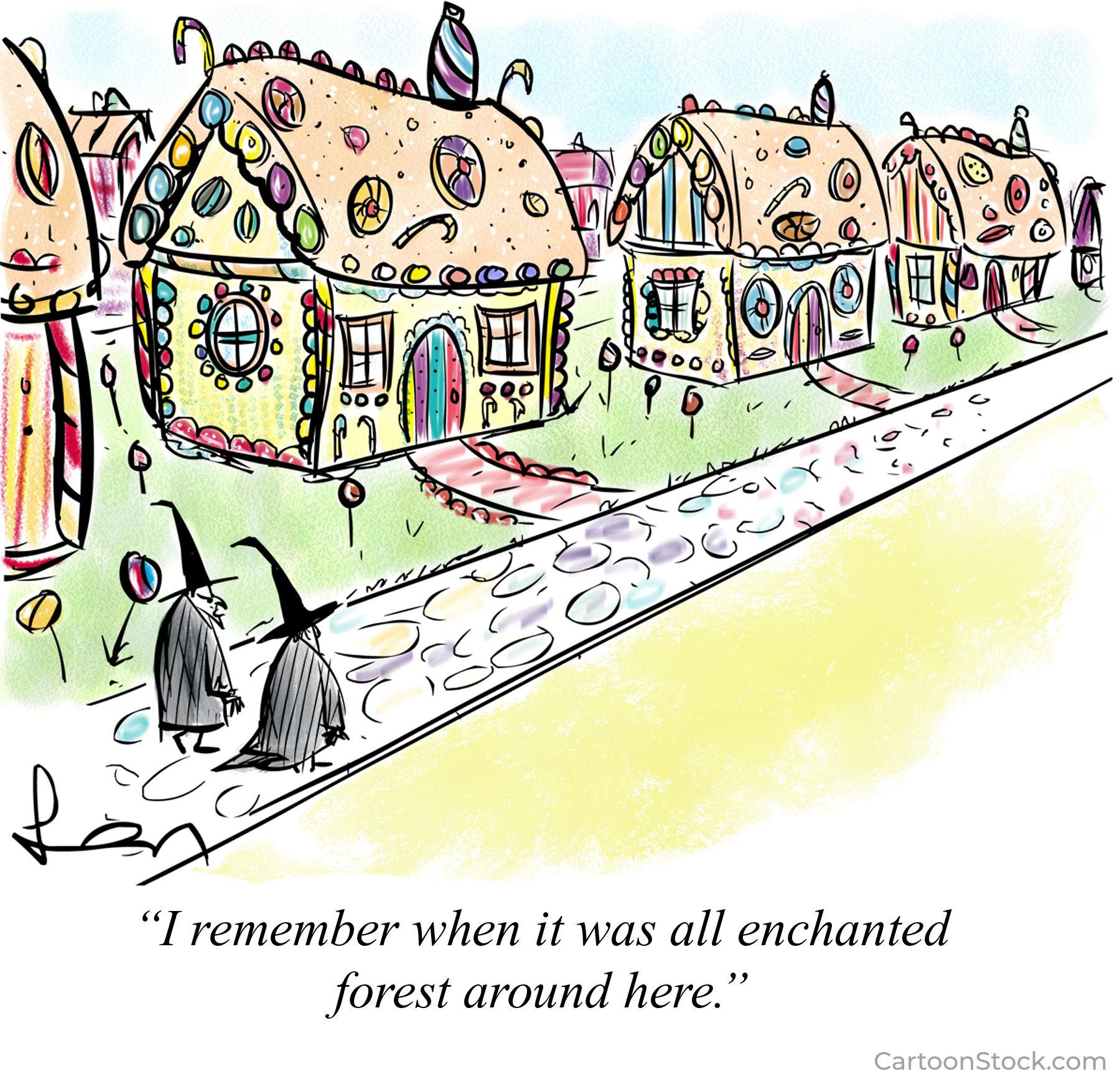
Cartoon by Len Hawkins, courtesy of CartoonStock.com
Regular Columns