Those familiar with Population Connection’s work know we have been highlighting the folly of pursuing infinite growth on a finite planet since 1968. Fortunately, a rising “postgrowth” movement is rekindling interest in respecting planetary boundaries and moving beyond growth as a measure of progress.
The myth of infinite growth
Humanity is in ecological overshoot, which manifests as the interlinked environmental crises that plague our world today, from climate change, to natural resource depletion, biodiversity loss, and pollution. The root drivers of overshoot are population and consumption growth.
Our planet is finite, which means the more of us there are, and the more each of us consumes, the bigger our environmental footprint and the deeper we go into overshoot. Most people recognize this obvious fact, yet many aren’t ready to draw the logical conclusion: we need to stabilize the human population and our consumption at levels that can be supported by Earth’s available resources over the long term.
 Using resources in a way that meets humanity’s current needs without preventing future generations from meeting theirs is the very definition of sustainability, a term that has lost its meaning due to overuse and misuse for greenwashing purposes. True sustainability is incompatible with infinite growth, yet modern society teaches us to always strive towards more – more stuff, more money, more people.
Every corporation’s core mandate is revenue growth, while governments want to see GDP and, in many cases, population, increase year after year. This “norm” is delusional and dangerous and has pushed our global society to the brink of collapse.
Fortunately, in our time of “polycrisis,” many are realizing that we’ve been led to believe in a fairy tale, and that the pursuit of growth at all costs is destroying our planet and making us miserable. A growing movement of researchers and activists are urging a transition to a “postgrowth” society, in which the reckless quest for increasing GDP is replaced with the pursuit of wellbeing for all on a healthy planet.
While the postgrowth movement is relatively new, systems scientists already issued a stark warning back in 1972, with the publication of the Club of Rome’s The Limits to Growth, which showed that continuing on business-as-usual growth trajectories would lead to societal collapse this century. The warning sadly went unheeded and was widely dismissed by mainstream economists. And yet, a 2020 study by wellbeing economist and sustainability researcher Gaya Herrington showed that our actual trajectory has so far very closely tracked the scenarios leading to collapse.
As Herrington put it in a TED talk,
“Our choice isn’t whether to keep growing or not. It’s whether the end of growth will come by design or disaster.”
Because we have so clearly already breached critical planetary boundaries, many postgrowth advocates argue that what we actually need is “degrowth” – a planned reduction of energy and resource use to bring humanity back into balance with the natural world in a way that reduces inequality and improves wellbeing.
An emerging international policy framework
Postgrowth is even gaining traction at the United Nations (UN), which is developing a new “Beyond GDP” framework to help countries more accurately measure and track progress using human welfare and sustainability indicators rather than just Gross Domestic Product (GDP).
A new report, Counting What Counts: A Compass of Progress for People and Planet, explains that while GDP has been used for decades as a proxy for overall societal wellbeing, it is no longer fit for that purpose.
As UN Secretary-General António Guterres told The Guardian,
“Let us not forget that when we destroy a forest, we are creating GDP. When we overfish, we are creating GDP.”
 The report does not call for ditching GDP completely, noting that economic growth has enabled investments in health systems, schools, infrastructure, and security, which have contributed to longer lives, lower infant mortality, and higher educational attainment. But it cautions that GDP is not a holistic measure:
“Despite strong GDP growth between 2000 and 2020 in Northern America, median healthy life expectancy in that region began to stagnate in the early 2010s, beginning to decline even before the COVID-19 pandemic. Eastern Africa has seen continuing rates of biodiversity loss and ecological damage despite consistent per capita GDP growth.”
Guterres explained,
“Moving beyond Gross Domestic Product is about measuring the things that really matter to people and their communities. GDP tells us the cost of everything, and the value of nothing. Our world is not a gigantic corporation. Financial decisions should be based on more than a snapshot of profit and loss.”
Limits to Growth co-author Jørgen Randers also offered a simple explanation in the 2022 Club of Rome book Limits and Beyond: 50 years on from The Limits to Growth:
“Economic growth is a tool to reduce poverty through productivity growth. When properly distributed, the bigger pie leads to higher material standards for the majority. If the pursuit of economic growth no longer increases human wellbeing, the logical move is to drop economic growth and seek wellbeing.”
Hopefully, the new Beyond GDP initiative will encourage some governments to drop GDP growth as their priority aim, and to set in motion policies that advance more important indicators related to health (physical, mental, and environmental), peace, security, life satisfaction, and so forth. The late Donella Meadows, lead author of The Limits to Growth, had laid out such a vision in her 2008 book, Thinking in Systems – A Primer:
“If you define the goal of a society as GNP*, that society will do its best to produce GNP. It will not produce welfare, equity, justice, or efficiency unless you define a goal and regularly measure and report the state of welfare, equity, justice, or efficiency. The world would be a different place if instead of competing to have the highest per capita GNP, nations competed to have the highest per capita stocks of wealth with the lowest throughput, or the lowest infant mortality, or the greatest political freedom, or the cleanest environment, or the smallest gap between the rich and the poor.”
*GNP is Gross National Product, which used to be the default measure for a country’s economic production, before it was largely replaced by GDP. While GDP is the total value of domestic goods and services produced within a nation’s borders, GNP is the value of all goods and services produced by a country’s citizens, both domestically and abroad.
What about population?
One shortcoming of the postgrowth movement is that it mostly ignores the population side of the equation. Population Connection is one of just a handful of organizations still advocating for an end to population growth, because many now wrongly believe this type of advocacy is inherently problematic.
In Limits and Beyond, Founder of the Collective Leadership Institute Petra Kuenkel argued,
“Population growth, worldwide, is always related to a combination of poverty and patriarchal dominance, in which women neither have sufficient access to education, nor the freedom to decide whether they want to become mothers or not.”
The wonderful thing about aiming for a more sustainable, stable population size is that the best way to achieve it is by empowering women and girls and removing all barriers to family planning and education. In areas where women have control over their bodies and lives, fertility rates have plummeted.
Yet instead of embracing this development as a win for women’s rights and a critical step towards a postgrowth society, growth-obsessed pronatalists and even mainstream media are framing it as a “crisis.”
 Through the lens of capitalism, people are reduced to workers, consumers, and taxpayers, leading policymakers and economists to assert that continuous population growth is key to a healthy economy, while population aging and decline cause stagnation and misery. An expanding body of research proves that this is, in fact, not at all the case. Nevertheless, due to the deeply ingrained cultural belief that growth should be continuous, countries with below replacement fertility rates are increasingly rolling out pronatalist policies to try to boost births.
While policies that make life easier for parents and would-be parents are certainly welcome, these have so far not been effective at significantly increasing fertility rates. Across the Global North and in many middle-income countries, a small family size of two or fewer kids has become the preferred choice. Alarmingly, some policymakers, including in the United States, are seeking to restrict reproductive rights to force women to have more children.
The only countries that still have very high fertility rates are those with the worst gender inequality scores – governments and funders must do more to ensure women in these areas also gain the freedom to choose their family size. There remains a huge funding gap for ending the worst gender injustices, including gender-based violence, child marriage, and unmet need for contraception. Accelerating investment in these areas is key to the two foundations of a postgrowth society: human wellbeing and sustainability.
Achieving an end to population growth could also help accelerate necessary changes to our economic systems. Capitalism traditionally requires a steadily growing population to prop it up. When this falls away, even the most reluctant governments will eventually be forced to look into the alternatives that wellbeing economists have been developing in recent years.
And of course, continuing to ignore the population factor is just as dangerous as pursuing endless economic growth. As Limits to Growth co-author Dennis Meadows wrote in Limits and Beyond:
“The global population will decline whether or not we strive for that outcome. If it is not reduced through proactive social intervention, it will be reduced through ecological forces.”
Why less could be more
In a postgrowth world with more equal distribution of resources, a smaller global population would also enable a high standard of living for all. But because population is a ship that is slow to turn, for now, wealthy countries must slash their consumption rates in order for poverty-plagued nations to increase theirs. This may not sound appealing to some, but lower consumption does not have to mean a lower quality of life.
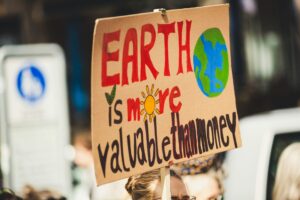 As the wise Donella Meadows wrote in Limits to Growth: The 30-Year Update (2004):
“People don’t need enormous cars; they need admiration and respect. They don’t need a constant stream of new clothes; they need to feel that others consider them to be attractive, and they need excitement and variety and beauty. People don’t need electronic entertainment; they need something interesting to occupy their minds and emotions. And so forth. Trying to fill real but nonmaterial needs – for identity, community, self-esteem, challenge, love, joy – with material things is to set up an unquenchable appetite for false solutions to never-satisfied longings. A society that allows itself to admit and articulate its nonmaterial human needs, and to find nonmaterial ways to satisfy them, would require much lower material and energy throughputs and would provide much higher levels of human fulfillment.”
Club of Rome Vice President Carlos Álvarez Pereira made a similar observation in Limits and Beyond:
“Science has rediscovered what we knew since the beginning of time: the quality of our relationships with others, humans, and non-humans, is the secret of a good life.”
People are increasingly awakening to these truths, questioning the cultural paradigm that has led us into this overshoot mess, and refocusing on the values that really matter. Are you one of them? Welcome, we need you! Together we can build a path towards a healthier, happier future.