Why discussing population is so important: A conversation with Prof. Tim Dyson
Written by Olivia Nater |
Published: October 2, 2026
Population Connection Digital Media Manager Florence Blondel recently interviewed Tim Dyson, Emeritus Professor of Population Studies at the London School of Economics and Political Science (LSE). Here is a transcript of snippets from their video conversation, which have been lightly edited for grammar and clarity.
Florence Blondel (FB): If you look at the world’s population today, what is the biggest demographic story you think we are living through?
Prof. Tim Dyson
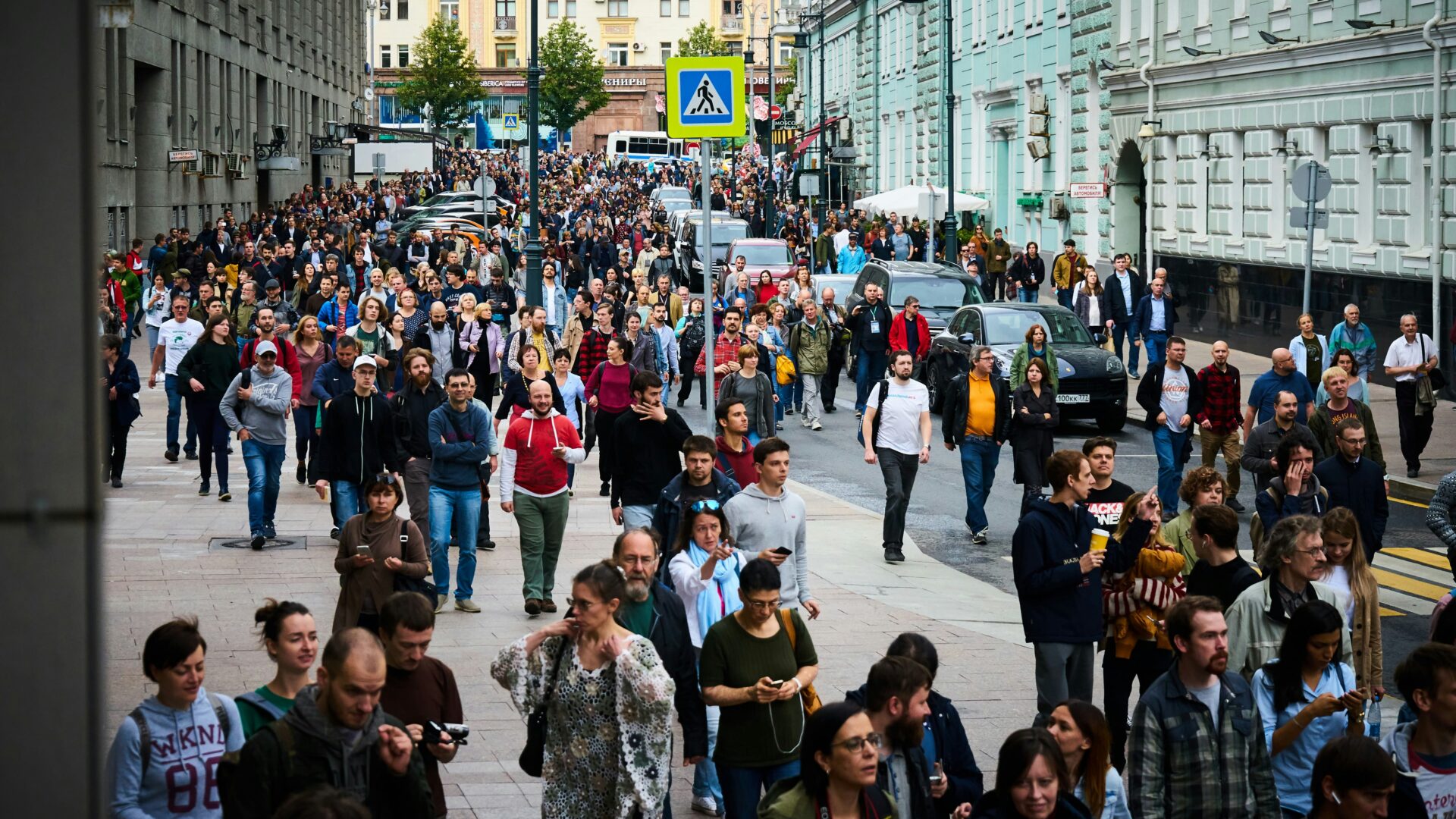
Tim Dyson (TD): Well, I suppose the biggest story is the sheer size of the world’s population. When I was born, there were only about 2.5 billion people in the world, and now there’s almost 8.5 billion people in the world. So, an absolutely massive increase in the size of the population, and it’s not over yet.We’ve got another two or three billion to come over the next 50, 60, 70 years.
It’s the size of the human population that strikes me as being terribly important, although many of us may wish to avoid it as an issue.
FB: Yeah, the avoidance.There are only a few organizations left that are covering this issue.
TD: Yes, that’s an absolutely key point. I was thinking, it’s quite remarkable how any kind of sensible discourse on population has almost disappeared, frankly, compared with when I started out as a young academic back in the 1960s and 1970s.
[Back] then, population issues were talked about on the radio, on the television and so on. Now it’s barely the case.Only in very specific contexts is population mentioned. And that really does surprise me. A similar change has happened in the context of the teaching of the subject. 40, 50 years ago there were courses on population, well, [at] lots of institutions in the US, many institutions in Europe, and so on. Now, in general, that has gone away.
And so, the retraction of discussion of the subject is mirrored in in the scholarly attention that it gets. It’s remarkable and, I’m afraid, sad.
FB: What do you think people are missing about the story here, about the fact that our population is still growing and we’re not even talking about it? What should we be telling people [so they] really start caring?
TD: You are one of the very few bodies that raise the subject in public, and that’s absolutely crucial. In the UK, there’s another institution that does the same sort of thing [Population Matters, where Florence worked before moving to the US]. But if you look at the press, the radio, the television, the magazines, the discussion is largely missing.
There’s a lot of work on different little facets of population, this form of contraception, this health intervention, you know, there’s all sorts of small ways in which the subject is touched upon. But the big issues of growth, interaction with the economy, interaction with the environment, those sorts of issues are not discussed there. They’re avoided. I live in the UK, and it certainly applies so far as the UK’s population is concerned. But I think this is a much bigger issue than just my country or even North America.
I think in large part people take the view that, well, we’re up at 8.5 billion, we’re going up to 11 billion and it’s all been done, as it were. And so, it’s just not worth discussing. They often say rates of population growth are coming down, which of course they are. But even so, the net additions to the human population each year are quite sizeable and larger than they were in the 1950s or 1960s or 1970s even.
I think we’re missing a huge story, an absolutely essential story. It is sad, but it’s also a worry because discussion of so many major issues in the world today does require an understanding of not only where we are, but where we’ve come and where we may be going.
FB: Are we now entering the other side of the demographic transition?(Maybe you could start by explaining what is a demographic transition?)
TD: The demographic transition is the movement of all human populations from conditions of high birth and death rates to conditions of low birth and death rates. And what happens almost always is that the death rate comes down first, and it comes down quite fast, but it takes time for the birth rate to come down. There’s a delay, basically. And so, in almost all human populations, you have very substantial population growth during the transition because the birth rate is above the death rate.
Now of course, today, quite a few countries have gone through most of the demographic transition and some are experiencing another set of important demographic issues and those relate to very low fertility.
To simplify massively, in the past, 100 years ago, 200 years ago, on average, couples might have had five or six live births per woman during the course of her reproductive life.Now, the transition itself, in a very simple way, involves eventually moving to something like two births per woman.
But of course, what has happened in a large number of countries in the last 30 or so years is that they’ve not only reached two births per woman, but they’ve gone below two births per woman, sometimes a long way below — 1.2, 1.3, those sorts of numbers.
This is the result of changes during the demographic transition, but it sets up its own series of challenges for societies. And again, it’s important to have an aggregate demographic perspective on what those challenges are going to be. And it’s largely missing in the public debate, whether it’s in North America or whether it’s in in Europe or elsewhere.
FB: So, would you say [falling fertility is one of] the challenges that people do not understand? Because right now they are practically calling it a “crisis.” American politicians are telling the people here that they are “under-babied” and we need more babies to solve these challenges. How do we make people understand that we can take care of it?
TD: I happen to take the view that population reduction is a good thing. I think there are already too many of us on the planet, and the planet would be in better health if there were fewer of us.
However, population reduction can be achieved in a disastrous way.
Just as, for most of the period over the last 60 or 70 years, rapid population growth has been harmful not only for the environment, but for economic and sometimes social development, so rapid population decline would also be disastrous for societies.
While I’m in favor of population decline, I would want moderate or gradual population decline.
Societies, particularly societies in East Asia, they’re ahead of the rest of us in many of these respects. And I suspect that quite a few of the answers to these questions we will get from measures taken in East Asia.
FB: Yeah, if [population] goes down, it might not be easy to bring it back up. So, the measures that we are taking, Singapore for example, they want to give about 55,000 US dollars per child until they turn 17 years old. But they also admit that this may actually not work. So, we’re really not moving from this trend.
TD: It is a new challenge, there’s no doubt about it.
In my view, having somewhat below replacement fertility is a good thing because it should lead to gradual population decline, which is what I would like to bring about.
The problem is that levels of total fertility in some countries in East Asia, including Japan, South Korea, and also quite a few countries in Europe and no doubt elsewhere in the world, is well below 1.8 or 1.9.
It would depend upon what the level of fertility is, but you want to nudge it up a bit to, let us say 1.8. And that will lead to a slow population decline. Now, I don’t believe this is impossible. I think it’s quite possible, but it requires some major discussion and major changes in society.
I’m sure it can be done, provided we as societies become more, well, firstly, more men have to be involved much more in childcare. That’s a key thing. Secondly, societies as a whole have to invest much more in childcare and in education. So, it’s expensive, but at the same time, I have to ask myself sometimes, is a society that has very low levels of fertility a particularly healthy society.
Surely, there’s something good about bringing kids up and enjoying children. And if you have a society where we men and women are not doing that and not prepared to do that, you’ve got major problems.
So, I see the issue of raising fertility as one also involving a return to sanity, if you like, and normalcy and some positive things.
I’m sure that it can be done, though it will be expensive, not just in terms of money, but in terms of societal reorganization.
I’m not suggesting everyone should have children, of course not. But there are a lot of people who would like to have children who for various reasons do not have children.
And we’re not creating conditions in which that is facilitated.
FB: And on that note, can we talk about population aging? What is population aging really and how do we deal with it?
TD: Well, the aging issue is the result of the demographic transition, essentially, particularly the fertility decline within the demographic transition.
So, before the demographic transition, when birth and death rates are high, populations tend to be fairly young.
Now, because fertility has continued to go below replacement at the end of the demographic transition, we’re getting the median age of the population getting higher and higher and higher.
And that has huge consequences for society, I think.
FB: How important are population dynamics to the environmental challenges we are facing, particularly climate change?
TD: Absolutely crucial.
I’ve done a lot of work over the last 30 years on climate and published a few things on it. And I’m afraid the situation looks, for me at least, extremely bleak. The level of atmospheric CO2, the level of carbon dioxide in the atmosphere, has been going up at an accelerating rate.
Most alarmingly, and for over a century, we’ve known what a doubling of the level of CO2 in the atmosphere will do for the global temperature.
Svante Arrhenius, over 100 years ago, said it would lead to roughly a 4°C increase in the global temperature.
We’re well on our way to a doubling of atmospheric CO2 — the current level is 425 parts per million, something like that.
So, I think global heating, I don’t like to use the term ‘warming,’ is going to lead to disastrous results everywhere, to varying degrees.
And the fact that there are 8.3 billion of us on the planet is a part, not all, by any means, but a part of the issue.If we had a smaller population now, let’s say it was be 6 billion rather than 8.3 billion, this problem would be easier to deal with.
So just as on the issue of climate, people talk about climate change deniers, and there are such deniers very often, I find that the people who are talking about climate change deniers are sometimes population deniers themselves, because they tend to say it’s all a matter of consumption.
Well, it is largely a matter of consumption, that’s true. But it’s not all a matter of consumption. It’s partly a matter of how many of us there are.
And yet a lot of these people have been saying for decades that population isn’t a problem.
So again, good on you at Population Connection because you’re trying to beat the drum and keep the drum going a bit at least.
FB: Yeah, we keep that drum going. And we always talk about this population versus consumption debate, and people are always coming up on our channels [saying], “No, it’s only consumption,” “You can fit [everyone] into Texas,” “It’s just resource distribution.”
TD: Well, of course, I’d be more than happy to pay higher taxes for distributive issues. But there isn’t going to be a huge change in distribution. The rich countries are not going to give away 25% of their GDP, or whatever it may be, to poorer countries.
Indeed, they used the famous book at the World Bank back in the 1970s, Redistribution with Growth — super book. Redistribution isn’t talked about too much nowadays, at least not in contemporary Britain, unfortunately, and that’s a sad thing.
But even if it was, redistribution by itself is going to take a hell of a long time.
So population, again, it’s part of the issue in the context of climate change. And of course, not just climate change, also in the context of a whole host of other environmental issues, whether it’s pollution in water supplies, pollution in the oceans, use of nitrogen fertilizers.
I mean, the list goes on and on and on.
FB: If you could correct one misconception [people have about population], what would it be?
TD: Well, I’m not sure, Florence, that they have any misconceptions, because I think most people have no idea about what the population of their country is, let alone the population of the world, or how fast it’s growing, or whatever.
It worries me. If there’s one generalization about human beings that I would make, it is that we avoid difficult issues.
So, if there was one thing, I would try and get population back in courses, not only in universities, but in high schools as well.
Some more of Prof. Dyson’s thoughts about taboos and the future:
It may well be the case that people sitting here in 50 years’ time will take a different view on how we could have done a much better job in providing people with birth control essentially almost everywhere.
I regard modern contraception as one of the most amazing developments, really. But because it involves sex and sexual behavior, again, it’s a difficult issue and so people tend to avoid it.
The subject of demography or population is full of difficult issues: birth, death, sex, migration, abortion, contraception, all sorts of things. And yet, if we are educated and mature individuals, we should be able to address all of those things.
I suspect there’s going to be, unfortunately, a real catastrophe. That’s not my word, that’s the word of the UN Secretary-General. We face a catastrophic future. It’s what he’s talking about in the context of climate change.
If that happens, then people will look back at the period roughly from 1950 up until the present day — a period where there was massive increase in population, massive increase in consumption, massive increase in carbon emissions into the atmosphere.
And they will look back and think, you know, how profligate were these people?
How badly and stupidly did they behave?
I mean, I’m not going to start talking about nuclear weapons, but there’s plenty of nuclear weapons in the world. And I’m certainly not in the camp that believes that they won’t ever be used.
So I’m not particularly optimistic looking at the future.
And that is a problem because I think there is a tendency amongst people, climate scientists included, and naturalists, and so on, to say there are all these problems, but I’m sure we can deal with them.
Well, I’m not sure we can deal with them if I’m honest with you, but that’s my hope of course, because I’ve got children and grandchildren, and you know, there’s everyone else’s children and grandchildren.
Public Health in Belize: Experiences and Insights in the Field
Sydnie Stocks, Special Gifts Officer at Population Connection, is a Master of Public Health (MPH) candidate at the University of Arizona, studying Global Health. Here, she reports on her work…
Report: Wildlife populations still in freefall, but there is hope
A new report by WWF confirms that monitored populations of vertebrate species declined by an average of 73% between 1970 and 2022. The strongest decline was among freshwater species, followed…