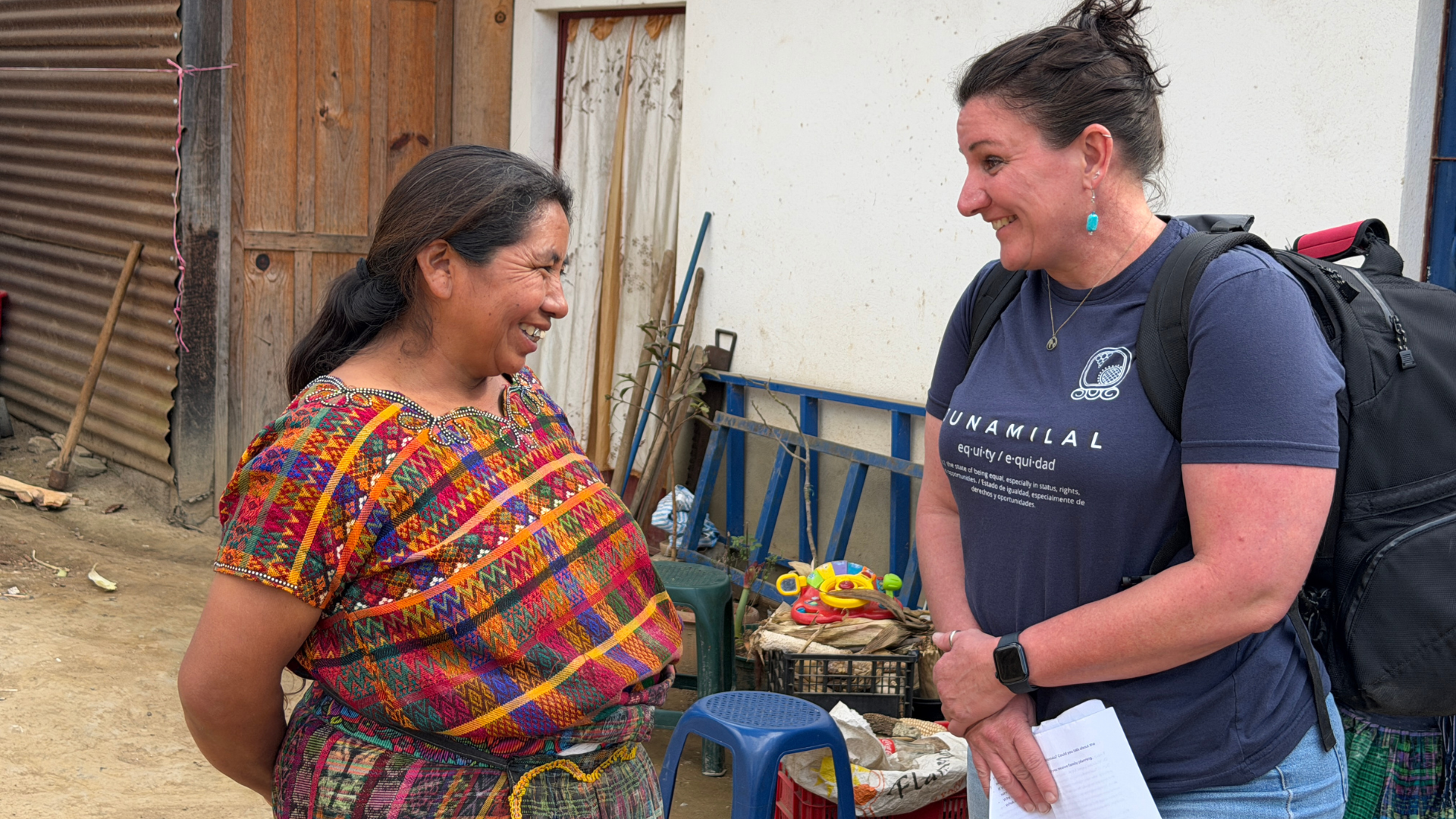
Anne Kraemer, co-founder of Maya Health Alliance | Wuqu’ Kawoq, speaks with a woman during a community outreach visit in rural Guatemala.
From challenges to change: What we’re learning from our Global Partners
Written by Florence Blondel |
Published: November 20, 2026
“Maybe they don’t have money for the bus. Maybe there are no buses in their communities. Our roads are pretty bad. Maybe it’s only 20 miles distance, but it can take them eight hours to get into a health system.”
— Dr. Michelle Dubón, Medical Director, WINGS Guatemala
Across 13 conversations with Population Connection’s Global Partners, I heard stories like Dr. Dubón’s, stories of extraordinary challenges, but also of local leadership, resilience, and what meaningful partnerships can make possible. I spoke with people working in East Africa, South Asia, and Latin America, in communities thousands of miles apart but facing overlapping challenges: poverty, barriers to education, gender inequality, food insecurity, environmental degradation, and limited access to health care.
Some of the stories were difficult to hear. Others made me smile. A few stayed with me long after the calls ended.
The challenges are real
For WINGS Guatemala, even reaching one woman with reproductive health care can require extraordinary effort.
Sometimes a mobile clinic reaches 25 women. Sometimes it reaches only two. “But those two women,” Dr. Dubón said, “we know that we’re saving their lives.”
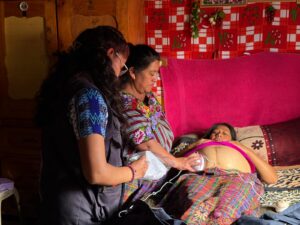
Maternal health – prenatal home visit by Maya Health Alliance in Guatemala
We often talk about impact in numbers: people reached, services delivered, communities benefited. Those numbers matter. But what about the effort it takes to reach someone who might otherwise have no access to care at all?
Wuqu’ Kawoq/Maya Health Alliance (MHA) faces similar barriers in rural Indigenous communities in Guatemala, where geography is only part of the problem. Language barriers are significant as well — 22 Mayan languages are spoken in the country, yet many government health services operate only in Spanish. MHA’s nurses and doctors speak their patients’ languages and travel directly into their communities.
“If it doesn’t come in their language, if it doesn’t come in a way that they can understand,” Anne Kraemer, Co-founder and Executive Director/CEO, rhetorically asked, “are they really able to make that decision for their future, for their life, for their family?”
In Nepal, Kamal Rawal, Executive Director ofthe Rural Women’s Development and Unity Centre (RUWDUC), discussed the high prevalence of girls facing child marriage and chhaupadi, a practice that isolates girls and women during menstruation.
“During the menstruation period … girls are not allowed to stay in their regular beds … some of the girls were forced to stay in the cowsheds.”
— Kamal Rawal
Participants in the essay competition on chhaupadi.
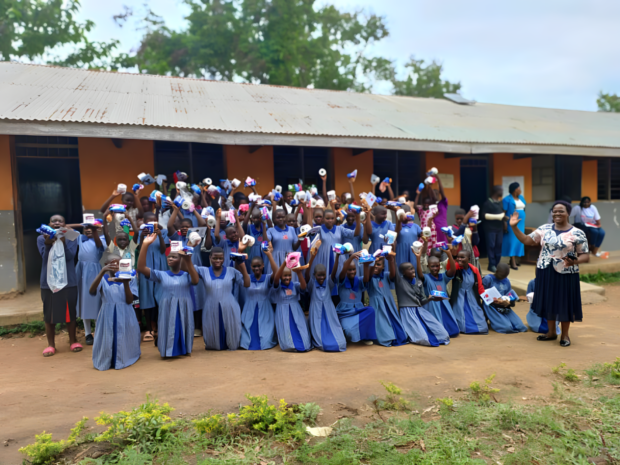
RUWDUC’s Girls Empowerment Project works with students, parents, and teachers to challenge menstrual taboos, and has used activities including counseling, essays, speeches, debates, and educational materials to help young people speak openly about chhaupadi, child marriage, and reproductive health.
In Kenya, Melvine Ouyo, Founder and Executive Director of Hope for Kenya Slum Adolescents Initiative (HKSAI), described the organization’s work with young people navigating overlapping challenges including poverty, school dropout, teenage pregnancy, menstrual hygiene, mental health struggles, violence, and limited access to sexual and reproductive health information. As Project Coordinator Brenda Sanaipei put it, “these challenges rarely occur in isolation”.
In southwestern Madagascar, Dr. Marni LaFleur, Founder and Director of Lemur Love, explained that in the Malagasy communities where the organization works, food can be difficult to secure.
“There’s no electricity. There’s no running water. There’s no kitchen. There’s no infrastructure. There’s no roads,” Dr. LaFleur said when describing the challenges of providing school lunches to 300 children.
From beneficiaries to benefactors
Across the interviews, I kept hearing examples of program participants becoming community leaders.
In Uganda, Girl Up Initiative Uganda (GUIU) helps girls develop the confidence and agency to make decisions about their health, education, and futures. Clare Akumu, Partnerships Officer, knows what that opportunity can mean because she once participated in Girl Up’s programming herself.
“If I am able to speak to you right now with my voice and have agency in my life, it’s because Girl Up invested in me,” she told me.
AEP’s Learning & Leadership Center equips students with life-changing business and financial literacy knowledge.
A similar dynamic exists at African Education Program (AEP), which supports women’s entrepreneurship, nutrition, and food security, education, and reproductive health in Zambia. About 80% of its local team are former program participants, according to Co-Founder and Executive Director Julie-Anne Savarit-Cosenza:
“They started with us as kids. They went on to university thanks to our scholarship program, and then they chose to come back, and they’re the ones spearheading this work.”
At RUWDUC, girls who were once reluctant to speak publicly are now producing their own podcasts, discussing menstruation, sexual and reproductive health, harassment, and gender-based violence.
A One Health approach to interconnected challenges
One of my favorite parts of conducting these interviews was seeing just how comprehensive our partners’ work is. Some of them use a distinctly One Health approach, addressing human, animal, and environmental health holistically.
Conservation Through Public Health (CTPH) began by protecting Uganda’s endangered mountain gorillas and providing them with veterinary care. But Founder and CEO Dr. Gladys Kalema-Zikusoka (a Population Connection board member) quickly learned that they “couldn’t protect the gorillas and keep them healthy without improving the health of their human neighbors.”
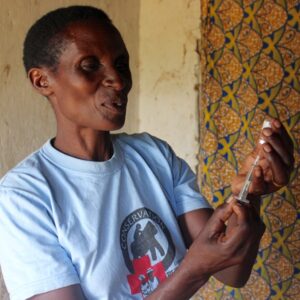
Hope Matsiko preparing to give a Depo- Provera injection at her home.
Today, CTPH’s Village Health and Conservation Teams integrate family planning, public health, livelihoods training, and conservation programming. The organization began with 26 community volunteers and now has more than 430 reaching over 10,000 households in the areas surrounding Bwindi Impenetrable Forest, home to nearly half the world’s mountain gorillas.
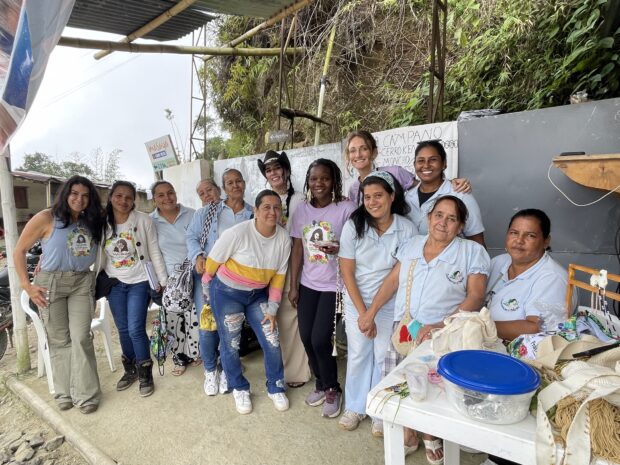
In Colombia, Women for Conservation addresses reproductive health, women’s empowerment, livelihoods, and biodiversity conservation.Founder and President Sara Inés Lara explained,
“Conservation is impossible to be done if we don’t integrate women in the process.”
Sara described how greater economic security and access to health services can also enable women to participate more fully in environmental protection.
Steven Bloomstein of Venezuela’s Turimiquire Foundation offered another perspective. He explained that when people have the freedom to determine the size of their families, the resulting trend toward smaller families can also help slow population growth. “So what people actually want on a micro level is what the world needs on a macro level,” he told me.
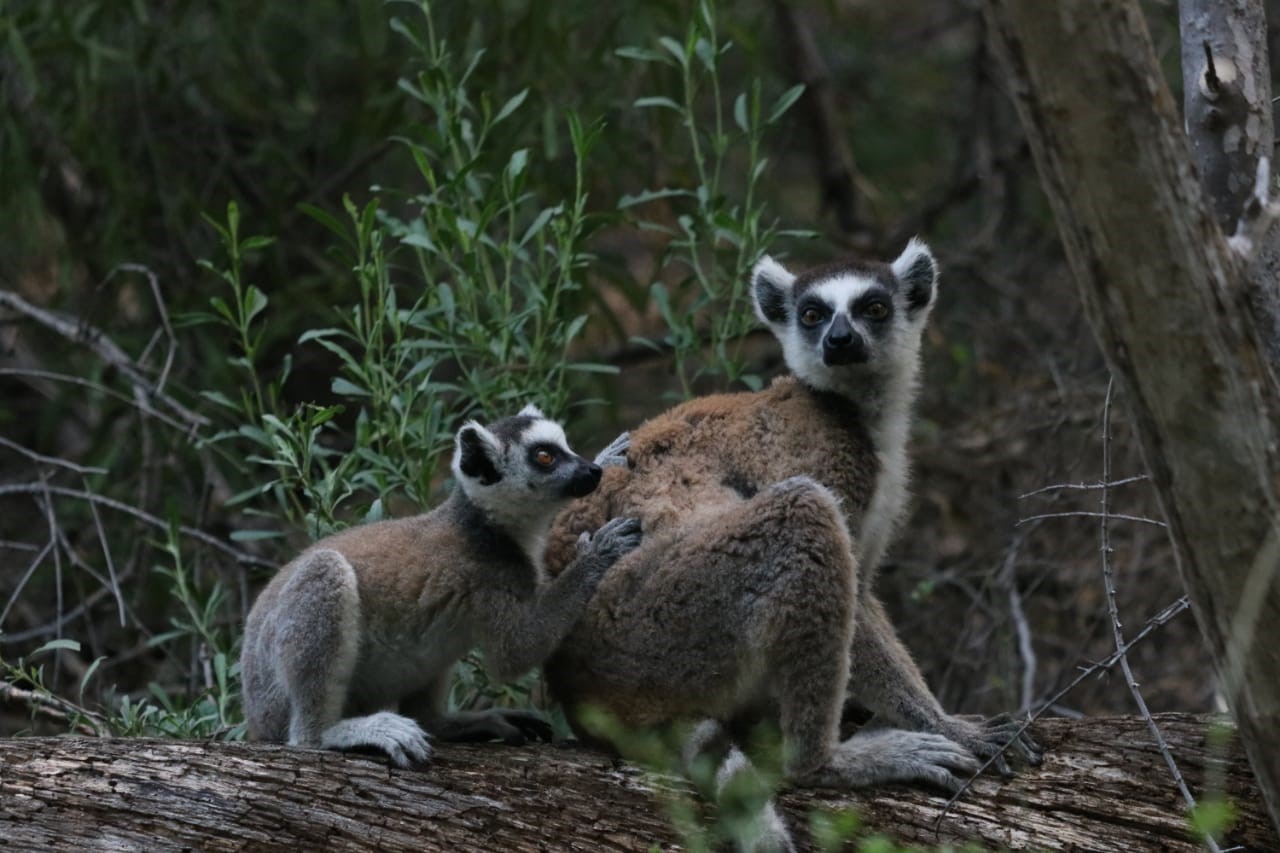
A ring-tailed lemur mom and her youngster.
And in Madagascar, Dr. LaFleur of Lemur Love reached a remarkably similar conclusion:
“I started as a biodiversity researcher. I studied lemurs. Over the years, I’ve come to recognize that biodiversity conservation is much more about people than it is about animals.”
The organization’s forest rangers protect lemurs and restore habitat, while its community initiatives address human needs, including hunger and education.
Health and sustainable development
In Venezuela, Turimiquire Foundation‘s family planning work has expanded in response to community needs, including requests for educational support. Turimiquire describes education as the“second step”after families and adolescents gain greater control over their fertility. Through its rural scholarship program, more than 500 students have attended high school and more than 100 have graduated.
Co-Founder and President Steven Bloomstein says people are expressing clearly what they want: the ability to determine the size of their own families.
“You’re just giving people what they really want.”
— Steven Bloomstein
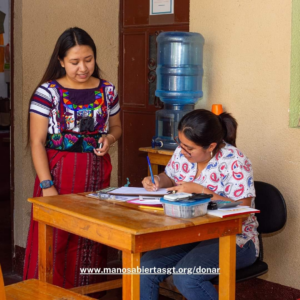
Health outreach by Manos Abiertas
That same connection between reproductive autonomy and the opportunities available to women and girls came through in several of my other conversations. In Guatemala, Diana Freiwald, Executive Director of Asociación Manos Abiertas Guatemala, she explained how helping women gain autonomy over their bodies and health also affects the decisions they can make about their lives and families.
That principle also came through strongly in my conversation with WINGS Guatemala. Dr. Dubón explained,
“We don’t make decisions for them. What we’re trying to do is to provide education and make the people decide for themselves what is better for them.”
In Uganda, FlowReady, the new Population Connection partner I founded and direct, begins thinking about reproductive autonomy before a girl even gets her first period. We prepare girls for menstruation before fear, stigma, and misinformation have a chance to take hold, while engaging boys, parents, teachers, health workers, and community leaders. FlowReady’s Country Director and Partnerships and Advocacy Manager, Lea Bwanika Owino, explained that this includes challenging the misconception that menstruation signals that a girl is ready for marriage and motherhood.
Our goal is not simply to help a girl manage her next period, but to ensure menstruation “is not a barrier to her education” or to the future she wants for herself. With Population Connection’s support, we launched a 12-week radio education program to take that conversation beyond schools and into the wider community.
The challenges are interconnected, and increasingly, I’m learning that the solutions have to be too.
What partnership makes possible
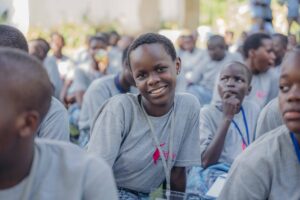
Girl’s meeting by Girl Up Initiative Uganda
When I asked our partners specifically what Population Connection’s support makes possible, many mentioned something less tangible than a particular program: flexibility.
Girl Up described how unrestricted funding allowed it to respond to what communities actually needed rather than what a narrowly defined grant required. In one school, the organization realized it made little sense to talk to girls about empowerment and rights when they did not even have a safe latrine. Executive Director and Co-founder Monica Nyiraguhabwa said,
“If there is any need that comes up in any part of our work, we are able to pivot,” Kakenya Ntaiya, CEO & President told me.
“Your investment really reflects the trust that you have in my team and in their ability to really work in the community.”
—Kakenya Ntaiya
Diana also spoke about how Population Connection’s partnership has created opportunities for collaboration among organizations working on sexual and reproductive health. Lea similarly described how that support has opened doors for FlowReady to build relationships with other Global Partners.
The ultimate goal: local ownership
Perhaps the strongest theme to emerge from all 13 interviews was ownership. Maya Health Alliance captured this beautifully:
“We’re just part of this work. We can be a stepping stone, we can be a partner in this work.”
— Anne Kraemer
But African Education Program may have put the ultimate goal most plainly:
“We were there yesterday, we’re here today, and we’re going to be there tomorrow until we’re not needed anymore. We do not want to be needed. We want this to be community-owned, community-led.”
— Julie-Anne Savarit-Cosenza
Across 13 conversations and three continents, I heard plenty about the challenges people face, but I heard even more about agency, and that gives me hope.
Preparing girls for menarche and fighting period poverty: Q&A with FlowReady
Through our Global Partners program, Population Connection supports a growing number of grassroots organizations around the world working to increase access to education, public health and family planning services. Their…
A women-led movement for a better future: Women for Conservation field report
Population Connection Senior Analyst Hannah Evans reports on a site visit to El Dorado Nature Reserve in the Sierra Nevada with Women for Conservation, our Global Partner based in Colombia.…